Bad Idle Air Control Valve Symptoms: Before Replacing
Bad idle air control valve symptoms can include unstable idle or difficulty maintaining idle as operating conditions change. Those symptoms are not exclusive to the valve. First establish whether the engine even uses a separate IAC valve; other designs control idle through an electronic throttle.
- A faulty idle controller can be associated with fluctuating idle or idle stalling; HELLA’s illustrated design controls bypass air with the throttle closed. HELLA idle-controller guide.
- Deposits, a stuck actuator and missing voltage are different fault routes.
- Check whether the exact engine uses the illustrated idle-controller design before buying an IAC valve.
- Record cold, warm and AC-load behaviour separately; one symptom or code does not confirm a failed valve.
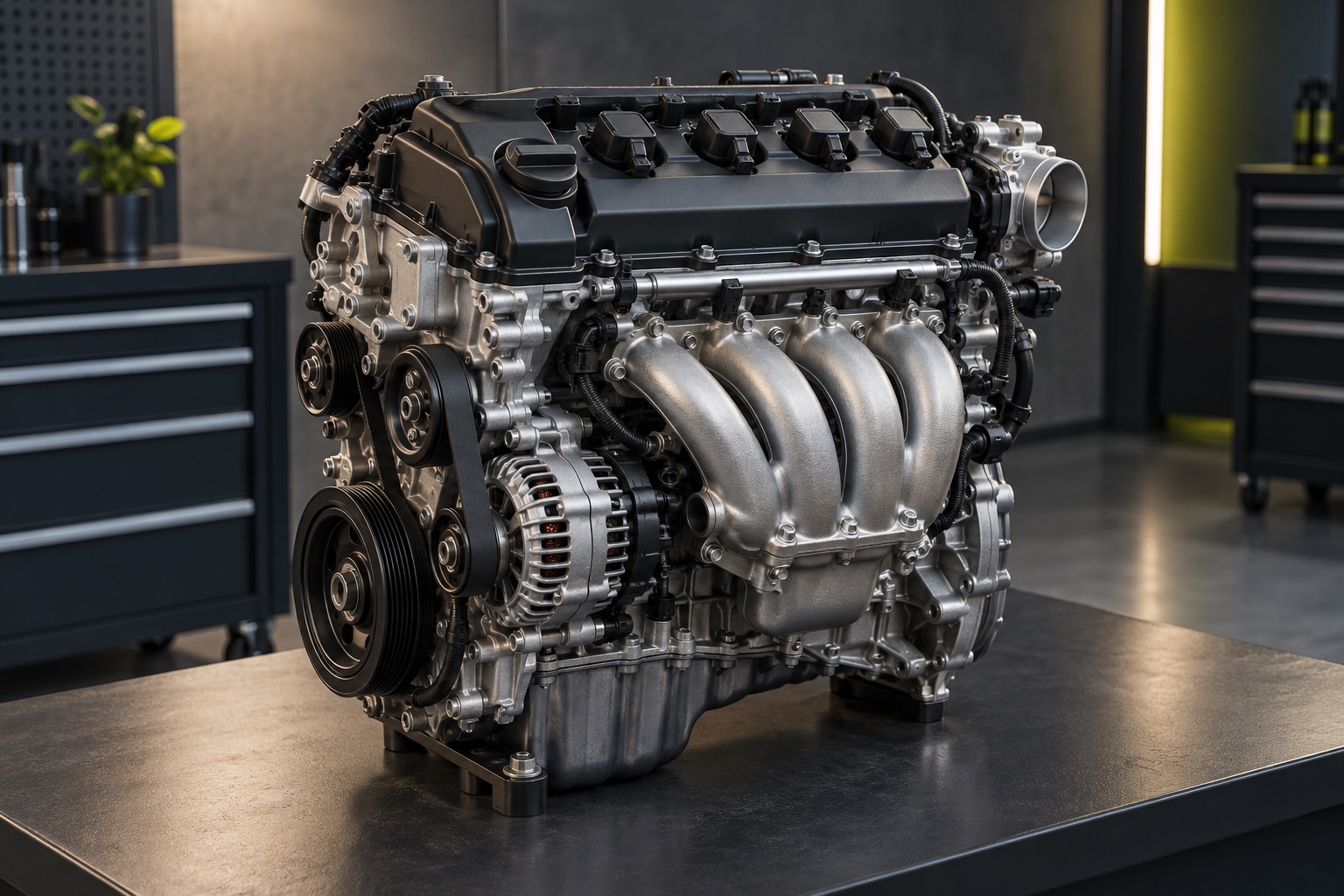
What does an idle air control valve do in the system described by HELLA?
It regulates bypass air when the throttle is closed as part of the engine's idle-control system. The HELLA idle-speed-controller guide describes an actuator moving a valve to change the available air passage. The engine controller coordinates that air adjustment with fueling as load changes.
- That function explains why symptoms can change when an accessory is switched on at idle. The engine must manage the additional demand without the driver deliberately opening the throttle. An observed response to AC operation is therefore useful context for diagnosis, but it is not proof that the valve failed.
- Confirm the actual idle-control design before asking for a replacement IAC valve. Not every vehicle uses the separate bypass actuator described in that example. The technician should identify the fitted engine-management arrangement, rather than order a component because the symptoms match an older vehicle's description.
Report whether the problem is a fluctuating speed, a consistently high idle, stalling at a stop or a rough-running engine. These descriptions overlap in casual conversation but are not identical. The workshop needs to know which behaviour is present and under what conditions before choosing its checks.
How does fluctuating idle differ from a combustion misfire?
Fluctuating speed describes how the engine speed changes. A misfire describes a failure of normal combustion. They can occur together, but seeing the tachometer move does not establish which system caused it.
The DENSO ignition-system troubleshooting guide includes misfiring and hesitation among ignition-related symptoms and emphasizes checking wiring, contamination and supply conditions. That gives the workshop an alternative path to consider when an engine shakes, rather than assigning every rough idle to the air-control valve.
Describe how the engine feels as well as what the instrument shows. Is the speed wandering smoothly, or does the car shake irregularly? Does the engine stop when you come to a halt? Did the warning lamp appear at the same time? Preserve any available scan report and the circumstances of the event. Do not press the accelerator repeatedly to disguise the symptom while waiting in traffic. If the engine stalls or the car becomes difficult to control, stop safely and arrange assistance. A driver observation should help the garage reproduce the condition safely; it should not turn road use into an improvised diagnostic test.
What failures does HELLA identify, and why is cleaning not always enough?
HELLA lists contamination or resin formation, coil short circuits, a stuck electromagnetic drive and absent control-unit voltage supply as possible causes in its idle-actuator technical document. Those are different failure modes. A cleaning proposal should explain which finding it addresses.
Cleaning may address a relevant deposit, but it does not repair a shorted coil or restore a missing supply. Equally, a supply problem does not automatically mean the controller itself has failed; the applicable circuit needs checking. Ask what evidence separates the suspected valve from its wiring and control path.
Avoid applying spray cleaners to an unfamiliar intake system as a universal cure. The suitable procedure, product and any subsequent initialization depend on the actual vehicle. Removing a component can also introduce a new leak or electrical connection issue if done incorrectly.
Which measurements are examples rather than specifications for every car?
HELLA's document gives reference tests for its illustrated actuator, including supply and coil checks, and tells the reader to observe manufacturer specifications. An example measurement is not a universal pass-or-fail value for a different actuator design.
- Ask the technician which component and specification it tested. Supply voltage, coil resistance, continuity to the housing and mechanical movement answer different questions. A valve can require mechanical inspection even when one electrical reading appears reasonable, and an absent supply may need circuit diagnosis before any component replacement.
- The test conditions matter too. A resistance check belongs to the de-energized circuit described by the relevant instructions; it should not be improvised on a powered connector. The correct wiring diagram and test limits are specific to the engine and actuator.
Request the measured result and the reference used in the explanation of a failed test. It makes an estimate more useful than “the resistance was wrong” without context. If the fitted system has no separate IAC valve, the shop should explain which idle-control checks it performed instead.
What does a useful post-repair idle check need to address?
It needs to address the conditions in the original complaint. An engine that idles normally with no accessories after a repair may still need the relevant load condition checked if the customer reported stalling when the AC was switched on.
Tell the garage whether the issue appeared cold, after warm-up, while selecting a gear or when another consumer operated. Ask which of those conditions could be checked safely and what the result was. Do not request repeated stalling on the road as proof.
The repair record should distinguish the cause found, the work performed and any required vehicle-specific adaptation. A reset is not the same as repairing contamination, wiring or a failed actuator. If initialization is part of the procedure, ask why it applies to this system and whether it was completed. If the symptom returns, preserve the circumstances and contact the workshop with the original record. A returning rough idle may share the original cause or require another diagnostic route. The useful approach remains to connect observations with tests, rather than treating the label “bad IAC” as a confirmed diagnosis of every idle complaint.
Can a bad idle air control valve cause stalling when the AC turns on?
A load change can expose an idle-control problem, but it does not identify the IAC valve as the cause. In the system explained by HELLA idle-speed guidance, the bypass valve helps control intake air when the throttle is closed and the engine’s load changes.
The workshop needs to compare the commanded idle response with actual engine behaviour. A sticking actuator, missing supply or another air or combustion problem can lead to different repairs. Establish which control hardware the engine uses before ordering a separate idle air control valve.
Describe the pattern accurately: idle speed falls when AC is selected, the engine stalls when stopping, the speed hunts, or the engine shakes while speed looks steady. A bad IAC valve symptom list cannot turn those observations into the same confirmed fault.
Why can cleaning the IAC valve leave an idle problem unchanged?
Cleaning addresses deposits in an accessible component. It cannot repair a failed electrical winding, restore a missing supply or correct an unrelated engine-management input. The decision to clean or replace needs the condition found and the applicable service method.
HELLA’s actuator checks separates contamination and sticking from electrical failures. For an engine with electronic throttle control, a guide to a separate bypass valve must not be applied as if the engine uses identical hardware.
Consider the surrounding intake arrangement too. Airflow controlled by the intended valve and air entering through an unintended leak are different paths. A technician can check the fitted system using its procedure; spraying products into an unknown throttle body is not a general idle-control test.
After the work, verification should cover the original load and temperature conditions. A warm engine idling quietly without accessories is a limited check of a complaint that occurred only with a cold engine or an additional load.
Idle-control symptoms and other possible causes
| Pattern | Detail to capture | Question for diagnosis |
|---|---|---|
| Cold-start stall | Time after starting | Cold operation or broader fault? |
| Warm hunting idle | Temperature and load | Airflow or combustion condition? |
| Change with AC | AC on versus off | Does idle compensation respond? |
| After recent repair | Work performed | Was an adaptation or connection affected? |
Editorial decision aid. This diagram does not diagnose a vehicle.
Do symptoms of a bad idle air control valve identify the failed component?
Unstable engine idle speed or stalling defines a complaint, not a parts order. The idle control valve regulates the relevant air path on engines equipped with that design. An air-intake fault, ignition complaint or incorrect input can need separate assessment. First identify the installed system and the operating condition in which idle changes.
If a check engine light accompanies the complaint, preserve its wording and diagnostic information. A sensor-related code does not automatically establish a faulty IAC valve. The decision to clean the IAC or replace it must follow the applicable procedure and finding; cleaning an air passage cannot repair an electrical supply or winding fault.
Which conditions make an idle fault easier to describe?
- Identify the exact engine and idle-control system.
- Record when the symptom appears.
- Preserve codes and recent repair history.
- Ask what test supports replacement.
Discuss your vehicle in Sharjah
For recurring idle problems, explain the operating conditions and any previous cleaning or replacement.
For an unstable idle, these pages explain the diagnostic service and stall symptoms: car diagnostic service; contact AS Auto Repair Garage Sharjah; Car Shuts Off While Driving? Here’s How to Troubleshoot It.
Frequently asked questions
Does every car have an IAC valve?
No. Some engines use electronic throttle control rather than a separate IAC valve.
Can I clean it to prove it is faulty?
Cleaning is not a diagnostic proof and may require a specific procedure. Confirm the component and fault first.
Can a vacuum leak mimic the symptom?
An air leak is one possibility to assess. The symptom alone does not select the cause.
Will disconnecting the battery repair it?
A reset does not repair a physical or electrical fault and can remove useful diagnostic context.
Is it safe to drive if it stalls at junctions?
Unexpected stalling affects safe use. Arrange assessment rather than repeatedly driving to reproduce it.
Can you drive with a bad idle air control valve?
A confirmed idle-control fault needs repair, and a stall or unstable idle can affect safe operation. Do not use a general symptom guide to decide that a particular vehicle is safe to drive. Arrange assistance when it cannot idle reliably, has other warnings or behaves unpredictably.
Is it better to clean or replace an idle air control valve?
Contamination and an electrical or mechanical failure call for different responses. Follow the applicable service procedure after identifying the installed system. Cleaning cannot repair a failed winding, missing supply or unsuitable control signal; replacing the valve cannot resolve every air leak or ignition problem.
Final answer
- Confirm the idle-control design for the exact engine.
- Record cold, warm and accessory-load behaviour separately.
- An idle-related code does not prove the valve has failed.