Car Shuts Off While Driving: What to Do Next
If your car shuts off while driving, concentrate on controlling the vehicle and reaching a safe stopping place. The engine stopping unexpectedly is a symptom, not a diagnosis of the fuel pump, alternator or ignition switch.
- An unexpected stall calls for a safe stop and assistance; a successful restart does not establish that the fault has cleared.
- Engine power loss and a dashboard electrical blackout are different observations. Preserve the timing of warning lamps.
- Ignition-coil faults can be associated with stalling or misfiring. DENSO: ignition system troubleshooting.
- Describe whether the engine later failed to crank or cranked without starting; those are different diagnostic paths.

What should you do during an unexpected stall?
Keep control of steering and braking, signal your situation when safe and move out of traffic if possible. Assistance may change when the engine stops, so the controls can feel different. Do not turn the key to a steering-lock position while moving.
Once stopped, prioritize the safety of everyone in the car. Do not stand in a live traffic lane to inspect the engine. If the location is unsafe, contact the appropriate emergency or roadside service. Follow the vehicle handbook rather than attempting an unfamiliar restart procedure in traffic.
What does it mean if the dashboard stays on after the engine stops?
It means at least some electrical functions remain available; it does not establish that the fuel system caused the stall. Compare that with a loss of dashboard power, which gives the workshop a different electrical pattern to investigate. Describe the sequence rather than naming a failed part.
An engine stop can be followed by warning lamps that illuminate because the engine is no longer running. Tell the technician whether each warning came before or after the loss of power. “The battery light was on after I stopped” is narrower evidence than “the battery warning appeared while driving before the engine cut out.”
Also separate a stall from a failure to restart. A starter motor cranks the engine during starting, as explained in the DENSO starter design information. It is not the component that normally keeps an already-running engine turning. A no-crank condition after a stall may therefore require its own investigation. If dashboard power vanished, note whether the clock or settings reset and whether accessories also lost power. Include any recent battery, wiring or aftermarket-accessory work. These observations help define the electrical inspection, but none proves that replacing the alternator or battery will fix the event.
Can an ignition fault cause stalling without a complete electrical blackout?
An ignition-system problem can affect combustion while the rest of the car still has power. The DENSO ignition troubleshooting guide lists stalling, hesitation and misfiring among possible ignition-coil fault symptoms. It also explains why visual and electrical checks must accompany fault-code interpretation.
- That is a diagnostic route, not permission to replace every coil after a stall. A damaged connector, contamination, inadequate supply or another engine-management issue can change the findings. Ask what evidence connected the suspected component to the actual event.
- Describe whether the engine stumbled or shook before stopping, whether the event occurred only after warm-up and whether a warning lamp was already present. If a fault code is available, keep its exact designation and status. “Ignition code” is less useful than the original scan record.
Do not clear codes or disconnect the battery simply to see whether the problem comes back. That can remove context the technician would otherwise use. Equally, a clean scan afterward cannot by itself prove that a hazardous intermittent stall will not return. The test plan needs to address the conditions you experienced.
What if overheating or fluid loss accompanied the cutout?
Treat those observations as reasons to stop safely and request help, rather than to restart until the engine runs again. A temperature alert changes the inspection priorities. The HELLA cooling-system diagnostic guide separates checks for leakage, circulation, the radiator, fans and thermostat.
A cooling complaint therefore needs more than a coolant top-up. Ask where any lost coolant went and what component failed the relevant check. Do not remove a pressurized hot cap or reach near belts and fans while investigating beside the road. The recovery decision should come before component diagnosis in an unsafe location.
Fluid on the ground also needs identification. Do not call every wet patch an engine-oil or coolant leak from appearance alone. Photograph it if you can do so safely and report where it was relative to the vehicle. Air-conditioning condensate and a mechanical-fluid leak are different findings. If you recently had service or cooling work performed, provide the invoice and timing. It helps the workshop check the relevant area, but the fact that work preceded a stall is not proof that the work caused it. Keep the diagnosis tied to inspection evidence rather than the order of events alone.
How should the garage demonstrate that the original stall was addressed?
Ask for a written description of the fault found, the tests used and how the repair relates to your event. For an intermittent complaint, agree when you will receive an initial diagnostic update and what additional testing requires approval. Diagnosis time is not the same as an already-promised repair completion time.
Before collection, ask what verification was performed and whether any warnings or unresolved findings remain. If continued driving is not recommended, arrange recovery instead of asking to “try it on the way home.” Road safety is not a suitable test method for an unexplained cutout.
Bring your original sequence of events to the conversation: engine behaviour, dashboard power, warning timing and restart behaviour. It is the most useful information you can contribute without carrying out unsafe tests yourself. A successful repair should explain that sequence, rather than merely remove a warning from the dashboard.
Why should fault information be preserved before the battery is disconnected?
A stored fault record and the driver’s event description can help a technician investigate an intermittent cutout. Disconnecting a battery or clearing codes before the inspection may remove useful context, depending on the vehicle. The workshop should explain what was retrieved, what the record supports and what it does not establish.
DENSO ignition inspection guidance distinguishes visual ignition checks from electrical testing. A damaged connector, contamination or a supply problem is a different finding from a component name mentioned in a code description. The diagnosis needs a connection between the evidence and the engine actually stopping.
Keep the original warning wording, any safe photograph already taken and the order of events. Note whether the engine lost power gradually, stopped abruptly or stopped after a temperature warning. These are observations, not diagnoses. Also state whether the engine restarted without an intervention, after assistance or only after an identified repair.
Do not repeatedly drive the vehicle to reproduce a stall in traffic. If the fault is intermittent, the technician needs a controlled plan that addresses the reported conditions and the safety of anyone involved. A test drive, when appropriate, is not permission for the owner to continue using a car that may stop unpredictably.
How can a charging system fault make a car shut off while driving?
A charging-system fault can affect the electrical supply the vehicle needs to keep operating. However, the battery warning lamp and a stall must be interpreted in sequence. DENSO charging-system diagnosis recommends checking the battery, drive belt, wiring and voltage drops before condemning the alternator.
A warning that appeared before the engine cut out is different from a lamp that illuminated only after the engine stopped. Once the engine is no longer turning, normal charging output is no longer being produced. Describe which event came first rather than assigning the cause from the dashboard as it looked after the stall.
The technician needs the supply behaviour under the relevant conditions and the charging-system design fitted to the car. Replacing an alternator from a warning-light photograph alone can leave a battery, belt or connection problem unresolved.
What does the difference between no crank and crank-no-start tell you?
No crank means the starting system is not turning the engine as expected. Crank-no-start means it is turning, but the engine does not begin normal operation. DENSO starter troubleshooting separates starter supply and engagement checks from an engine that turns but will not run.
After a car dies while driving, that distinction changes the next investigation. A click or slow rotation points toward a starting or supply check; normal cranking moves the question toward the conditions needed for the engine to run. Neither observation identifies a failed part on its own.
Keep the original stall and the later attempt to restart as separate events in your description. A vehicle can have a primary running fault and then a battery depleted by repeated attempts. The second condition should not erase the first complaint.
Do not repeatedly crank or drive the car to reproduce a cutout. If the engine stops unpredictably, arrange appropriate assistance and a controlled diagnosis.
Stall symptoms and the checks they need
| Observed pattern | Information to preserve | Avoid assuming |
|---|---|---|
| Dashboard stayed lit | Warnings and engine behaviour | Battery failure |
| Dashboard went dark | Electrical resets and accessory changes | Fuel pump failure |
| Temperature warning | When temperature rose | A routine restart will fix it |
| Cranks but will not start | Sound and warning messages | Starter must be replaced |
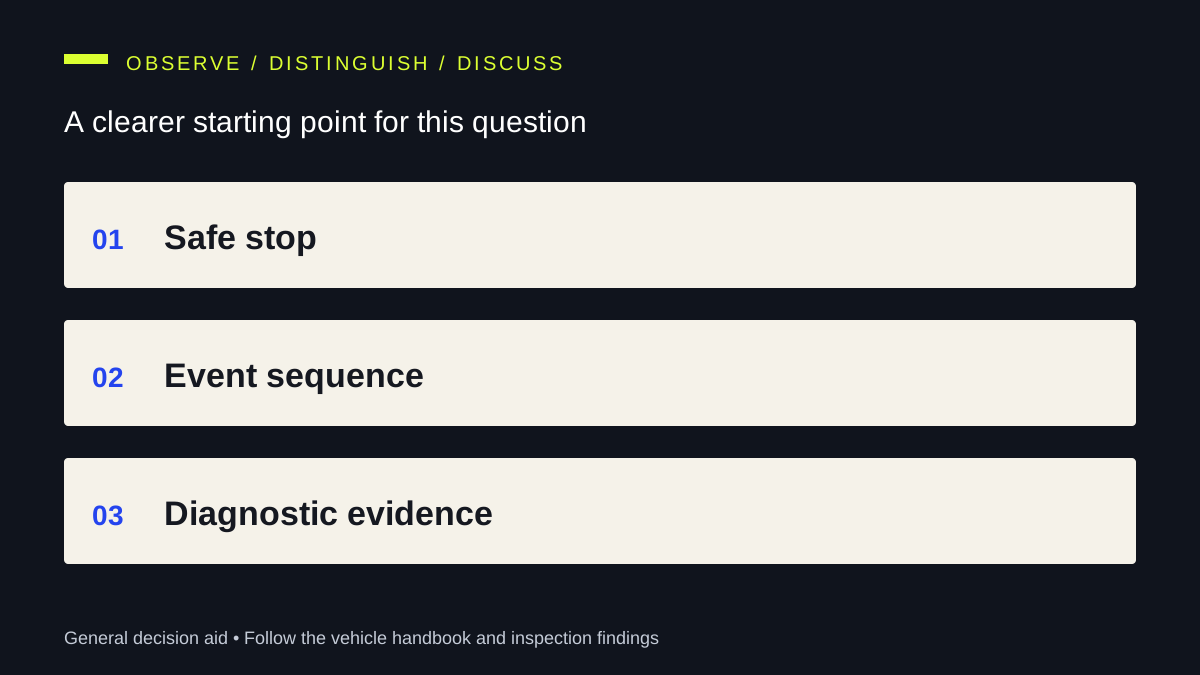
Editorial decision aid. This diagram does not diagnose a vehicle.
What should you tell the workshop after an engine stall?
- Reach a safe stopping place when possible.
- Arrange roadside assistance if driving cannot safely continue.
- Record warning messages while parked.
- Describe the sequence of events without repeatedly restarting.
Discuss your vehicle in Sharjah
After an unexpected stall, arrange assistance when the car cannot be used safely. Give the workshop the original warning and sequence of events.
Useful next steps: car diagnostic service; contact AS Auto Repair Garage Sharjah; Bad Ignition Switch: Signs, Symptoms & Starter Problems.
Frequently asked questions
Can I continue if it restarts?
An intermittent stall can return. Arrange assessment rather than treating a restart as proof of safety.
Could low fuel cause it?
Fuel supply is one possible route, but the actual level and other evidence need checking.
Does a battery light identify the alternator?
A lamp appearing after the engine stops is not enough to identify the original fault.
Should I erase the fault codes?
Preserve diagnostic information for the workshop. Erasing it can remove useful context.
Will a scanner give the exact failed part?
A code identifies a detected condition or circuit. Further testing may be needed to establish the cause.
Which sensor can make a car shut off while driving?
A relevant signal fault is one possible diagnostic route, but the symptom does not identify a sensor. Stored faults, the operating conditions and vehicle-specific signal checks must support that conclusion. Supply, ignition, fuel delivery and mechanical condition may require separate investigation.
Can a car stall and then start again?
Yes. A restart describes what happened after that event; it does not rule out an intermittent fault. Record whether there was a temperature warning, loss of dashboard power, a period of waiting or assistance before restarting. Arrange diagnosis before treating the vehicle as reliable for normal travel.
Final answer
- Stop safely and arrange assistance if the engine stalls unexpectedly.
- Record whether the dashboard stayed powered or went dark.
- Smoke, fuel smell, overheating or an oil-pressure warning need urgent attention.