Bad Ignition Switch Symptoms: What Else Can Cause Them?
Bad ignition switch symptoms can overlap with battery, wiring, starter and key-recognition faults. A key that will not turn is also a different complaint from a key that turns normally but produces no crank. Describe the sequence before choosing a replacement part.
- A sticking key, loss of electrical switching and coded-key authorization problems can involve different components.
- No crank differs from normal cranking without combustion.
- DENSO separates starter power-supply and control-circuit checks. DENSO starting-system guide.
- Diagnose the observed symptom before replacing an ignition switch, lock cylinder or starter.
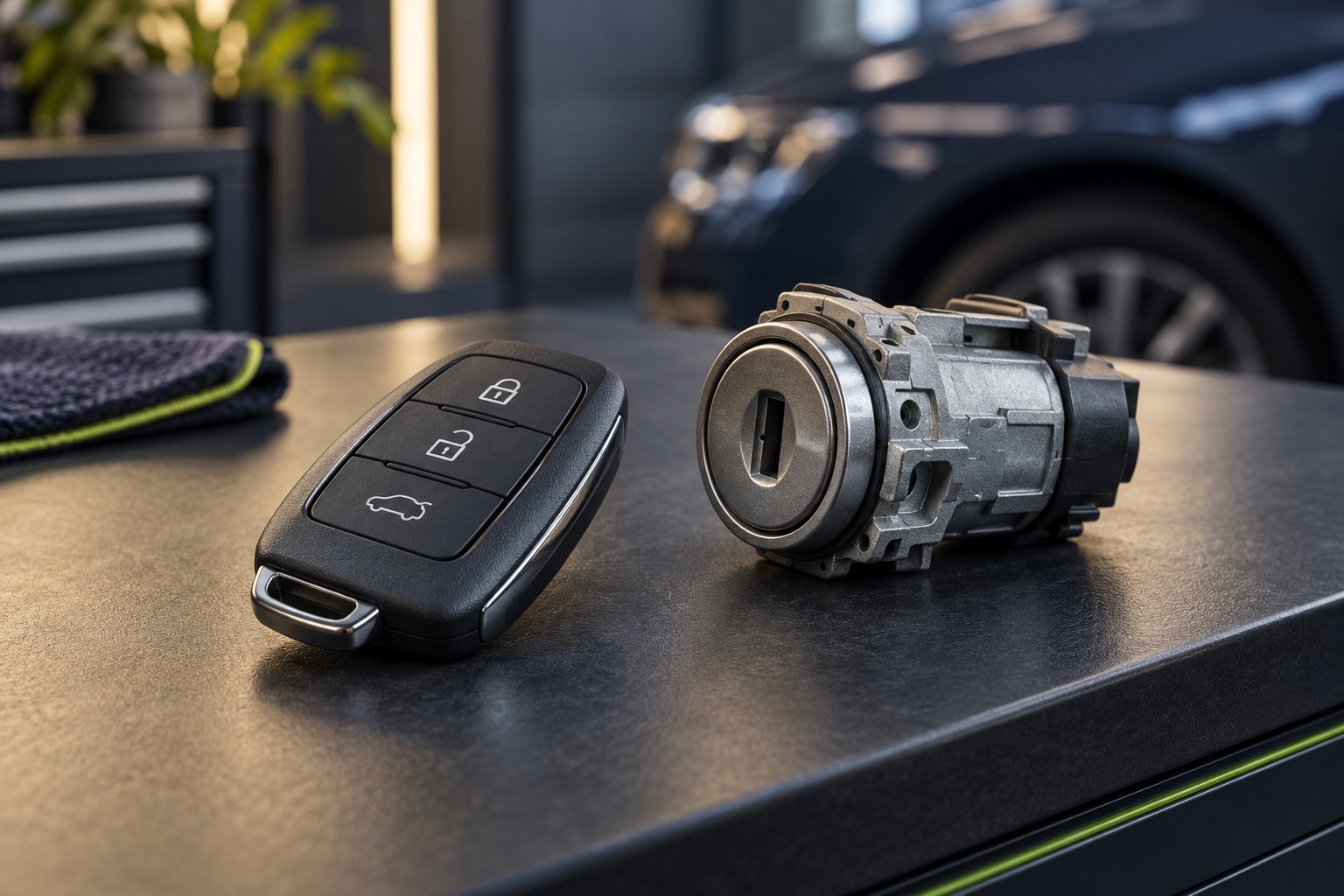
Which part are you calling the ignition switch?
The term can refer to the electrical switch that controls relevant circuits, while the lock cylinder is the mechanical part operated by a key. A push-button system introduces a different arrangement. Identify the actual vehicle design before assuming the same replacement applies to every no-start complaint.
- The key's authorization is another function. Ford's passive anti-theft instructions describe a coded-key system that prevents unauthorized engine starting. A key can therefore involve mechanical operation, remote functions and electronic authorization, depending on the vehicle.
- Describe what fails: the key will not turn, accessories do not power up, the starter does not crank or the engine cranks without starting. These are different observations. “The ignition is bad” does not preserve enough information to decide which part of the system should be inspected.
If the vehicle uses a start button, report the message and conditions shown rather than requesting a key-operated switch by name. The technician should explain the fitted system and connect the proposed work to the actual symptom.
How can a no-crank complaint differ from an ignition-switch failure?
The starting circuit includes more than the driver's switch input. The DENSO starter troubleshooting guide begins with battery condition and connections, then distinguishes power-circuit and control-circuit checks. Those steps explain why a no-crank complaint should not immediately become an ignition-switch replacement.
A click, slow cranking and silence are useful descriptions, but they do not each identify one universal failed component. Tell the garage whether dashboard power remained present and whether the behaviour changed between attempts. Do not repeat extended starting attempts simply to make the symptom more obvious.
Ask which part of the command or supply path failed a check. A missing control signal, excessive circuit resistance and a mechanically loaded starter need different investigation. The repair estimate should name the finding and the reference used, not just the symptom that triggered the visit. If the engine turns normally but does not start, say so. That behaviour is different from a starter receiving no command. Engine-running checks and key-authorization information may then become relevant. The aim is to define the complaint accurately before paying for a component that only addresses a different starting condition.
Can an ignition-switch complaint explain an engine stall while driving?
It can be one route for investigation, but an unexpected stall does not prove that route. Preserve the sequence of engine behaviour, electrical power and dashboard messages. A loss of engine combustion with accessories still working presents a different pattern from an apparent electrical interruption across the vehicle.
- If the engine stops, focus first on safe control and assistance. Do not turn the key into a steering-lock position while moving or try to recreate the cutout in traffic. A repair should be based on controlled checks and the original event description.
- The DENSO ignition troubleshooting guidance describes other ignition-related routes to stalling and emphasizes physical and electrical checks. That provides a reason to distinguish a switch complaint from coil, connection or supply issues rather than treat the word “ignition” as one component.
Ask which evidence connects the proposed switch repair to the driving event. If the workshop could not reproduce the fault, that limitation should be recorded along with the test plan. Replacing a plausible part is not the same as confirming the cause of a safety-critical intermittent stall.
What should you confirm before approving an ignition repair?
Confirm the exact component, part application and associated work. Electrical switch replacement, lock-cylinder work and key programming can be separate tasks. A complete assembly may include some of them, but the estimate needs to state what is included for the actual vehicle.
Ask whether existing authorized keys will remain usable and whether any registration or initialization is required by the repair procedure. Do not assume every switch job needs programming, or that a mechanically fitting key is automatically authorized to start the engine. The answer follows the system, not a universal rule.
For a no-crank complaint, request the relevant electrical findings. For a key-turning problem, request the mechanical findings. For a security message, request the authorization-related findings. Keeping those distinctions visible makes a parts recommendation easier to assess. At collection, review the original symptom and the checks completed after repair. Normal key movement alone does not verify a formerly intermittent driving cutout, while a successful start does not necessarily explain an earlier mechanical sticking problem. The repair record should show which complaint was addressed and what, if anything, still needs investigation.
What should be verified when a switch repair changes several vehicle functions?
Verification should follow the functions actually affected by the repaired arrangement. Correct mechanical key movement, accessory operation and authorized engine starting are different observations. The work record should explain which components were replaced and which functions were checked.
Some starting complaints involve connectors or wiring around the switch rather than damage to the lock cylinder. Others involve a security or supply issue elsewhere. The technician needs to inspect the applicable arrangement before explaining the parts and access required; a symptom description cannot establish the repair method for every vehicle.
Keep aftermarket changes in the history. An added alarm, remote starter or electrical accessory can be relevant to the inspection even if it was installed long before the complaint. Provide its documentation if available. Its presence alone is not proof that it caused the fault.
After collection, record a returning symptom precisely. A key that now turns normally but an engine that still does not crank means the full complaint remains unresolved. An intermittent loss of power after a switch job also requires assessment rather than the assumption that a new part rules out every electrical problem.
Why can dashboard lights work while the starter receives no usable start request?
Dashboard power and starter control are different parts of the starting sequence. Lights coming on show that those circuits have power in that condition. They do not show what reaches the starter control circuit when you request a start.
DENSO starter troubleshooting includes control-circuit connections and voltage-drop checks in its diagnostic sequence. The fitted ignition switch, start authorization and other application-specific conditions need to be interpreted together. A failed start can therefore require an electrical check even when the instruments look normal.
Describe whether turning the key changes the dashboard, produces a click or turns the engine. For a push-button system, describe the displayed message and engine response. The inspection must follow that design rather than a generic key-switch diagram.
Can a faulty ignition switch and a worn ignition cylinder have different symptoms?
Yes. The cylinder concerns the key’s mechanical operation; the electrical switch concerns the relevant circuit functions. A security system may also require recognized starting authorization. These functions can be integrated in an assembly, but a problem in one does not prove that all need replacement.
The Ford coded-key handbook example illustrates the separate requirement for a correctly coded key. DENSO starter troubleshooting addresses the electrical supply and control checks. Together they explain why a key turning freely is only one part of a successful start.
A key that will not turn, an engine that will not crank and an engine that cranks normally without running are different descriptions. Report the actual behaviour before naming the ignition switch as the failed component.
Do not force the key or use a bypass procedure to try to distinguish those functions. A repair proposal should identify the failed mechanical, electrical or authorization function and the work needed to restore it.
Mechanical key faults and electrical symptoms
| Symptom | Separate question | Avoid assuming |
|---|---|---|
| Key will not turn | Key and cylinder movement | Electrical switch failure |
| Key turns; no crank | Supply and start authorization | Starter failure |
| Cranks normally; no start | Engine starting conditions | Lock-cylinder failure |
| Security message | Key authorization | Battery replacement will fix it |
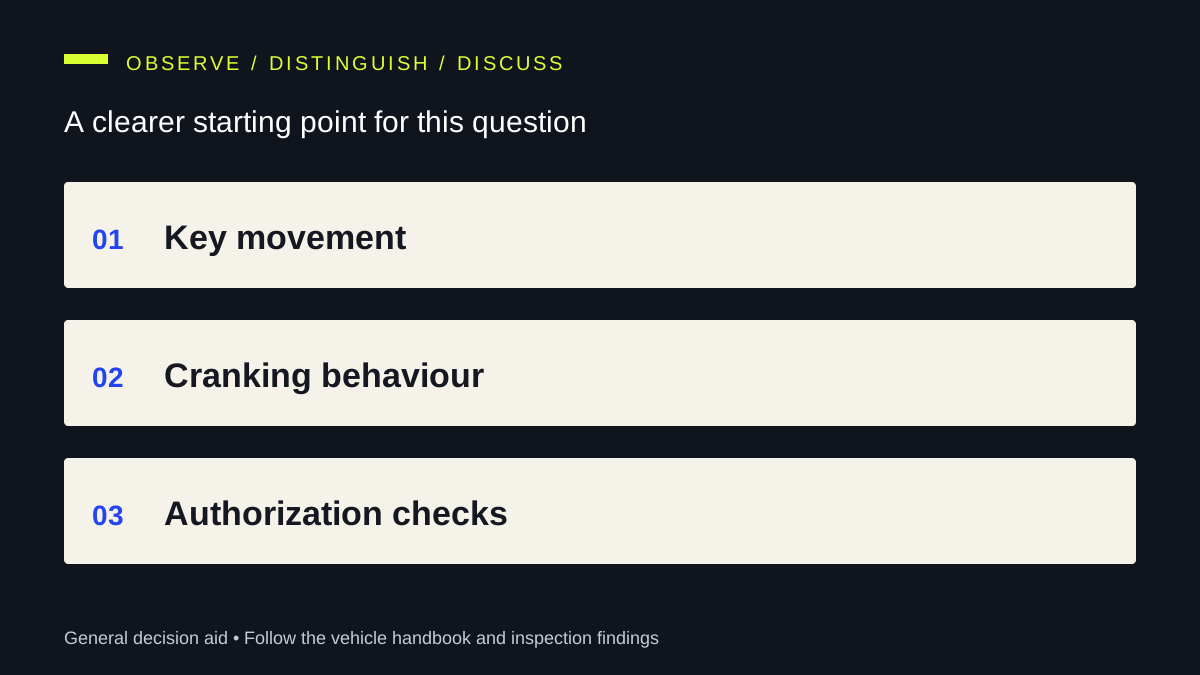
Editorial decision aid. This diagram does not diagnose a vehicle.
How should you describe the key and starting behaviour?
- Describe key movement separately from cranking.
- Record warning and security messages.
- Bring available keys and recent repair history.
- Request the test evidence and itemized repair scope.
Discuss your vehicle in Sharjah
Identify whether the key will not turn, the engine will not crank or starting authorization fails when arranging a starting-system assessment.
Useful next steps: car key replacement service; contact AS Auto Repair Garage Sharjah; Ignition Cylinder Replacement Cost: What Drivers Should Expect to Pay.
Frequently asked questions
Can a bad switch cause stalling?
Some electrical faults can interrupt operation, but unexpected stalling needs a broader diagnosis and safe stopping response.
Will a new key fix it?
Only if the key or its authorization is the confirmed problem.
Is a lock cylinder the same part?
No. Mechanical lock and electrical switching functions must be distinguished.
Can I bypass the switch briefly?
Do not bypass starting or security circuits. Use qualified assistance.
Why does it work intermittently?
Intermittent behaviour can occur in several circuits or components. Record the circumstances for testing.
Can an ignition switch be bad if the dashboard lights work?
Yes, working dashboard lights do not verify every part of the starting-request circuit. Supply, switch output, start authorization and the starter circuit need vehicle-specific checks. A lit dashboard or a click cannot by itself distinguish these routes.
Is a key that will not turn always a bad ignition switch?
No. Mechanical key or lock movement is different from an electrical switch function. Describe whether the key is stuck, turns normally, is recognized for starting, and whether the engine cranks. Avoid forcing the key or replacing an electrical part solely because the lock does not turn.
Final answer
- Mechanical key movement and electrical switching are separate functions.
- No crank and crank-no-start are different symptoms.
- Security messages should be recorded alongside the starting behaviour.