How Long Does It Take to Jump a Car Battery?
How long does it take to jump a car battery? A straightforward jump-start provides starting assistance. Roadside arrival, fault diagnosis and full charging are separate tasks, so the total time depends on the vehicle and the problem.
- AAA gives about 10–15 minutes as a typical jump-start process, rather than a universal roadside completion promise. AAA automotive guide.
- A jump-start supplies starting assistance; full charging is a separate task. VARTA describes a full charge as usually requiring overnight charging with suitable equipment. VARTA charging guide.
- Confirm vehicle and equipment compatibility and use the approved procedure; do not jump-start a damaged or leaking battery.
- A successful start does not establish battery health. Repeat discharge needs battery and charging-system assessment.
How long does a jump start usually take?
AAA’s automotive guide describes a typical jump start process of about 10–15 minutes. That estimate is for starting assistance, not roadside arrival, fault diagnosis or full battery charging. Follow the vehicle and equipment instructions; an unsuccessful or unsafe attempt calls for assistance rather than waiting indefinitely.
Why is starting different from charging?
AAA estimates about 10–15 minutes for the typical jump start process described in its guide. That is an operational reference for a compatible setup and a startable engine, not an appointment promise. Arrival of assistance, identifying another fault or replacing a battery can add separate time.
A jump start provides external power for starting. It does not rebuild the stored charge or verify how well the battery will hold it. VARTA’s charging guidance describes full charging as usually an overnight task and explains that charging mode must match battery technology. The charger’s completion indication and instructions matter more than a guessed universal driving duration.
Ask for the result of the battery and charging-system assessment after assistance. A car that starts today but becomes discharged again needs an explanation of battery condition, usage or electrical demand. Starting success and battery health are separate outcomes.
Which compatibility and safety conditions come before timing?
The vehicles or support equipment must be suitable for the intended procedure. VARTA specifies matching battery voltage and notes that most conventional examples use 12 V. That is not permission to assume every vehicle, electrical system or connection point is identical.
Follow both vehicle handbooks and the booster or cable instructions. Modern vehicles can specify designated connection points, and a hybrid or electric vehicle may have restrictions unrelated to the general appearance of its auxiliary battery. Confirm those instructions before attempting the process.
Do not attempt a routine jump on a visibly damaged, leaking or otherwise suspect battery. The VARTA safety guidance identifies battery-condition and handling precautions. If you cannot establish the correct procedure or safe condition, arrange assistance rather than using a timer as the deciding factor.
Equipment also needs to match its intended use. A cable that is physically available is not automatically appropriate, and a discharged portable booster cannot be assumed to provide the required support. Compatibility, instructions and condition come first; elapsed minutes do not correct an unsuitable setup.
What explains a battery that becomes discharged again?
The cause needs assessment rather than a repeated jump start habit. Usage, battery condition, charging-system behaviour and unwanted electrical demand can be separate routes for investigation. The circumstances of the repeat matter.
Record whether the car was parked, whether accessories were left in use and how long it had been since normal driving. Include a recent battery replacement or accessory installation. These observations help define the inspection without proving that an alternator, battery or aftermarket device caused the discharge.
Ask for the result of the applicable battery and charging checks, including the specification used. A resting voltage observation is not the same as a complete battery-condition test, and the presence of dashboard power does not establish that the starting system has an adequate supply under load. If the battery was replaced recently, provide the type and invoice. The vehicle may have application or service-procedure requirements that need to be checked. Ask whether the vehicle requires battery registration or adaptation after replacement.
How should you plan the visit after a successful jump start?
Ask whether the vehicle can be used and what follow-up is appropriate before assuming the problem is over. If there are warnings, unstable operation or another electrical concern, arrange assessment rather than simply making a longer drive to charge the battery.
For a charging recommendation, request the method suitable for the actual battery and vehicle. Time on a charger and time with the engine running are different inputs, and neither can be made into a fixed guarantee without knowing the equipment and condition. The handbook and equipment instructions govern the process.
How should a workshop distinguish a discharged battery from one that needs replacement?
A low state of charge and a failed battery are different findings. VARTA charging guidance discusses suitable charging and the need to match the charging method to the battery. A successful assisted start does not measure the battery’s remaining capacity or establish why it became discharged.
Ask the workshop to identify the fitted battery type, the relevant test result and any charging-system or repeated-discharge finding. The test method and acceptance criteria must suit the application. Dashboard brightness or an isolated resting-voltage observation is not a complete substitute for that assessment.
If replacement is advised, the proposed battery specification should match the vehicle’s requirement. Any registration or initialization operation should be explained as an application-specific step where required, rather than promised for every battery job.
Why can a dead battery make a jump start take longer than expected?
“Dead battery” can mean discharged, unable to provide the required starting current, damaged or simply blamed for another no-start condition. Those meanings lead to different checks. The time needed depends on which condition the assistance provider finds.
DENSO starter troubleshooting separates battery supply, circuit resistance and starter operation. A jump start cannot correct every fault in those paths. Normal cranking without engine operation is also a different complaint from a starter that receives inadequate supply.
Tell the provider whether there is no sound, a click, slow cranking or normal cranking. Report visible battery damage or a warning before anyone connects equipment. Do not continue attempts when the prescribed procedure or safe battery condition cannot be confirmed.
What should be checked before connecting jumper cables?
VARTA jump start guidance requires suitable equipment and attention to battery condition. The vehicle handbook identifies the permitted connection points and procedure. An unfamiliar battery terminal or convenient metal point should not be selected by guesswork.
Identify the vehicle type and battery arrangement first. A hybrid or electric vehicle may have a low-voltage starting or readiness concern that needs its own instructions. This guide is not a procedure for accessing a high-voltage traction battery.
Connection order, disconnection order and donor suitability belong to the prescribed procedure. If you do not know them for the vehicles and equipment involved, arrange qualified help rather than improvising a universal cable sequence.
After a successful start, distinguish assistance from charging and diagnosis. The original battery condition and reason for discharge still matter. A brief period with the engine running is not evidence that the battery is fully charged or that a repeated discharge problem has been resolved.
Jump-start time and follow-up work
| Task | Purpose | What success does not prove |
|---|---|---|
| Jump start | Help the vehicle start | Battery fully charged |
| Controlled charge | Restore stored energy | Battery has no internal fault |
| Battery test | Assess performance | Every vehicle circuit is healthy |
| Charging-system check | Assess energy supply | No accessory drain exists |
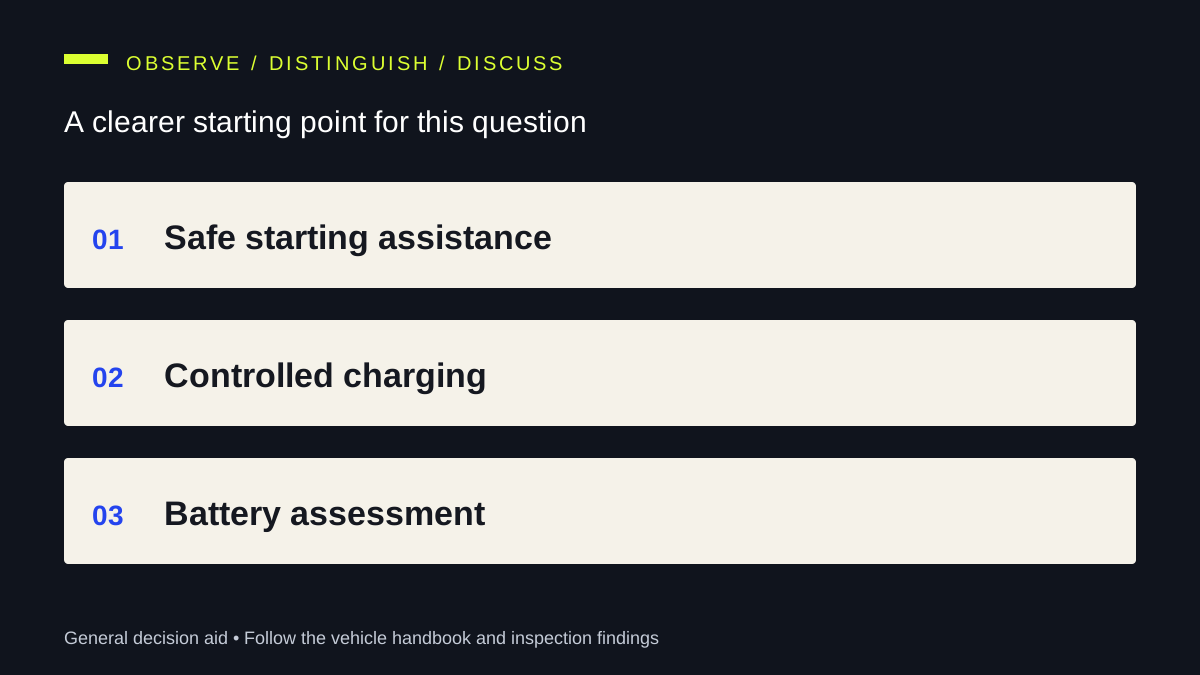
Editorial decision aid. This diagram does not diagnose a vehicle.
Does the time to jump start a car include charging the battery?
No. Time needed to start the vehicle with suitable assistance differs from the time needed for the battery to charge. A dead car battery also needs its condition assessed: low charge, physical damage and a no-start caused elsewhere do not mean the same thing. Car batteries and starting systems must be handled according to their own instructions.
Before anyone connects the jumper cables, confirm the equipment, the approved connection points and the procedure for both vehicles where a donor is used. Follow those instructions when removing the jumper cables as well. A fully charged battery or booster being available does not remove compatibility and condition checks. Obtain qualified help when those requirements are uncertain.
What information should accompany a battery-assistance request?
- Check the handbook and equipment compatibility.
- Look for damage without touching exposed hazards.
- Use the approved procedure or roadside assistance.
- Arrange testing and charging as appropriate after starting.
Discuss your vehicle in Sharjah
After starting assistance, request checks that explain why the battery was discharged and whether the complaint returns.
Useful next steps: battery replacement service; contact AS Auto Repair Garage Sharjah; How to Spot a Bad Starter: Signs and Symptoms.
Frequently asked questions
How long does it take to jump start a car battery?
AAA describes a typical jump start process of about 10–15 minutes. That reference does not include roadside arrival, other fault diagnosis or full battery charging. AAA automotive guide.
Is a successful start proof the battery is good?
No. It shows that starting succeeded under those conditions, not that the battery has passed a test.
Will a short drive fully charge it?
Do not assume so. Charge recovery depends on the system and battery condition.
Can I use any other vehicle as a donor?
No. Check both vehicles’ instructions and the equipment requirements.
What if there is only a click?
Stop guessing from sound alone. Battery, connections and starting-system checks may be required.
Can I jump a leaking battery?
No. Do not attempt to jump start a damaged battery; obtain assistance.
Can a completely dead battery be jump started?
First establish whether the battery is discharged, damaged or whether the no-start has another cause. Equipment compatibility and the vehicle instructions determine whether assistance is appropriate. Do not attempt to jump start a leaking or damaged battery, or assume that every no-crank needs a jump.
How long should I run the car after a jump start?
Use the vehicle and battery provider’s instructions for charging and follow-up. A successful start and a period of running do not verify full charge or battery health. Arrange the charging-system and battery assessment needed to avoid repeated discharge rather than relying on a universal running time.
Final answer
- AAA describes a typical jump start process of about 10–15 minutes. That reference does not include roadside arrival, other fault diagnosis or full battery charging. AAA automotive guide.
- Do not jump start a visibly damaged battery.
- Use the vehicle handbook and the booster or charger instructions.