Bad Starter Signs: Clicking, Slow Cranking and No Crank
Bad starter signs can include failure to crank, abnormal cranking or unusual starting noise, but these symptoms also occur with other faults. Before replacing the starter, distinguish what the motor does from what the engine does after it begins turning.
- A faulty starter can cause no cranking or poor cranking, but the same symptoms can come from battery, cable or control faults.
- DENSO checks battery condition and circuit resistance before condemning the starter. DENSO troubleshooting guide.
- Normal cranking without starting points to a different diagnostic path from no cranking.
- A click alone is insufficient evidence to authorize starter replacement.
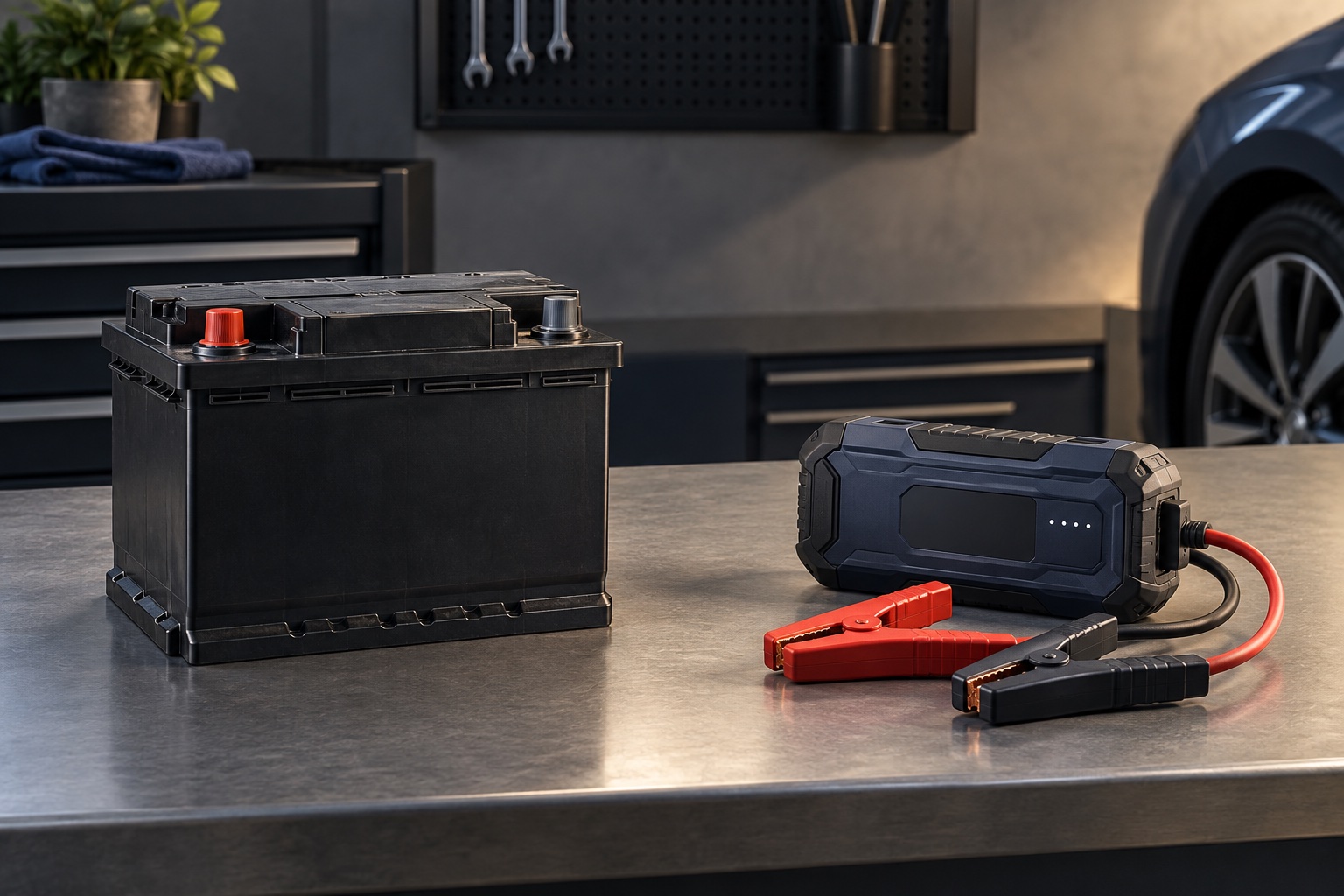
Why can dashboard power coexist with insufficient starting performance?
Dashboard illumination is a visible electrical function, not a complete assessment of supply during cranking. Starting places a different demand on the electrical system. Battery condition, connections and circuit resistance therefore need to be evaluated rather than inferred from whether a lamp is lit.
The DENSO diagnostic guide begins with battery condition and visual checks of cables and terminals. It then discusses current, cranking performance and voltage-drop checks. That sequence explains why a starter can receive an unsuitable supply even when other features appear to work.
Ask which finding supports the proposed repair. A weak battery, a poor connection and a failed starter can require different work. Replacing a starter without addressing an identified supply problem may leave the original complaint unresolved. Do not use an improvised wire or tool to bridge the starter terminals. The relevant test method belongs to the actual vehicle and trained technician. Your useful contribution is to report the condition and recent battery or electrical work, not to bypass the control circuit for a trial start.
What do current draw and voltage-drop tests help distinguish?
They help separate different electrical and mechanical patterns under the applicable test conditions. DENSO explains that high current with low cranking speed can indicate starter or engine-related mechanical concerns, while another combination can point toward excessive circuit resistance. The vehicle specification remains the reference for judging the result.
A voltage-drop test examines the loss across a defined part of the operating circuit. It is different from reading battery voltage at rest. A technician should identify the circuit section tested and the conditions used, rather than simply announce that “the voltage is fine.”
Ask for the result and applicable reference if the estimate depends on a failed check. A universal current limit or cranking-voltage threshold cannot cover every starter application, temperature and vehicle procedure.
The point of these measurements is not to make the repair explanation complicated. It is to connect the proposed component to evidence. A recorded failure in the supply path can justify connection or cable work, while a starter-specific finding can justify a different repair.
Why does a successful jump-start not prove that the starter is perfect?
It shows that the car started under the supported conditions. That is useful information, but it does not by itself assess every part of the starting system. A discharged battery, a circuit issue or an intermittent complaint may still need investigation.
- Similarly, an unsuccessful jump-start does not automatically prove the starter is defective. The setup, battery condition, command path and mechanical condition can affect the result. Describe whether the engine failed to crank or cranked without running so the workshop can choose the appropriate route.
- VARTA's jump-start guidance distinguishes safe compatible assistance from subsequent charging needs. A jump is not a full battery-charge or component-health certificate. Ask what follow-up is appropriate if the battery has been discharged.
Do not repeatedly attempt starts after smoke, overheating cables or an abnormal smell. Stop and arrange assistance. The absence of a successful start is a reason to assess the system, not to force it through longer and longer attempts until something changes.
What should an evidence-based starter replacement and verification include?
The estimate should identify the correct part application and the findings behind replacement. Ask whether the battery, supply connections and control path were assessed where relevant. This establishes why the starter, rather than another part of the system, is being renewed.
If contamination or an external fluid leak affected the area, ask how that condition will be addressed. Replacing a component does not automatically eliminate a separate source of contamination. Likewise, a repaired cable should have the relevant circuit result checked rather than being judged by appearance alone.
What can a voltage-drop test show that a visual cable check cannot?
DENSO starter troubleshooting discusses circuit resistance in starter diagnosis. A cable or connection can look present while failing to provide the required supply under the tested load. Visual condition and an electrical result therefore answer different questions.
Ask which part of the circuit was tested, under what conditions and against which vehicle reference. A voltage measurement without its location and load condition is difficult to interpret. The technician should distinguish a supply-path finding from a starter-internal finding and any mechanical load that needs further attention.
Do not apply a universal limit copied from a different starter or battery arrangement. The application, temperature and test procedure affect the interpretation. High-current starting systems also require safe handling and suitable equipment; this is a reason for a qualified diagnostic visit, not an invitation to improvise live tests.
Does a clicking starter mean the starter motor has failed?
A click identifies an audible event during the start request. It does not establish that the motor itself failed. DENSO starter troubleshooting discusses supply and control-circuit conditions as well as the magnetic switch and mechanical engagement.
A starter solenoid or magnetic switch needs the relevant supply to operate as intended. A poor connection can affect that supply under load even when dashboard lights illuminate. The diagnostic sequence must check what reaches the fitted components before a clicking sound becomes a replacement decision.
Say whether the click is isolated or repeated, whether the engine turns and whether the instrument behaviour changes during the attempt. Avoid repeated attempts just to refine the sound description. The event already observed is enough to begin a controlled inspection.
Why can a starter spin without turning the engine?
The motor’s rotation and engagement with the engine are separate functions. DENSO starter troubleshooting includes the pinion, drive assembly and flywheel or flexplate ring-gear condition in its assessment of a starter that rotates without normal engine rotation.
That complaint differs from slow cranking and from an engine that cranks normally without starting. The technician needs to establish which movement occurred and inspect the applicable engagement path.
A new starter may be appropriate for a confirmed starter-internal defect. It does not automatically correct damage elsewhere in the engagement assembly or an unresolved electrical supply problem. The proposed part and supporting checks should follow the actual finding.
Do not bridge starter terminals, strike components or dismantle the system to test a theory. These are high-current and moving assemblies. Arrange a qualified starting-system check and preserve the original description for comparison after repair.
Starting sounds and their possible causes
| Starting behaviour | Description to give | Not a confirmed diagnosis |
|---|---|---|
| Silence | No audible crank | Starter motor failure |
| Clicking | Single or repeated click | Battery failure alone |
| Slow crank | Engine turns slowly | One specific component |
| Normal crank; no start | Engine turns but does not fire | Starter needs replacing |
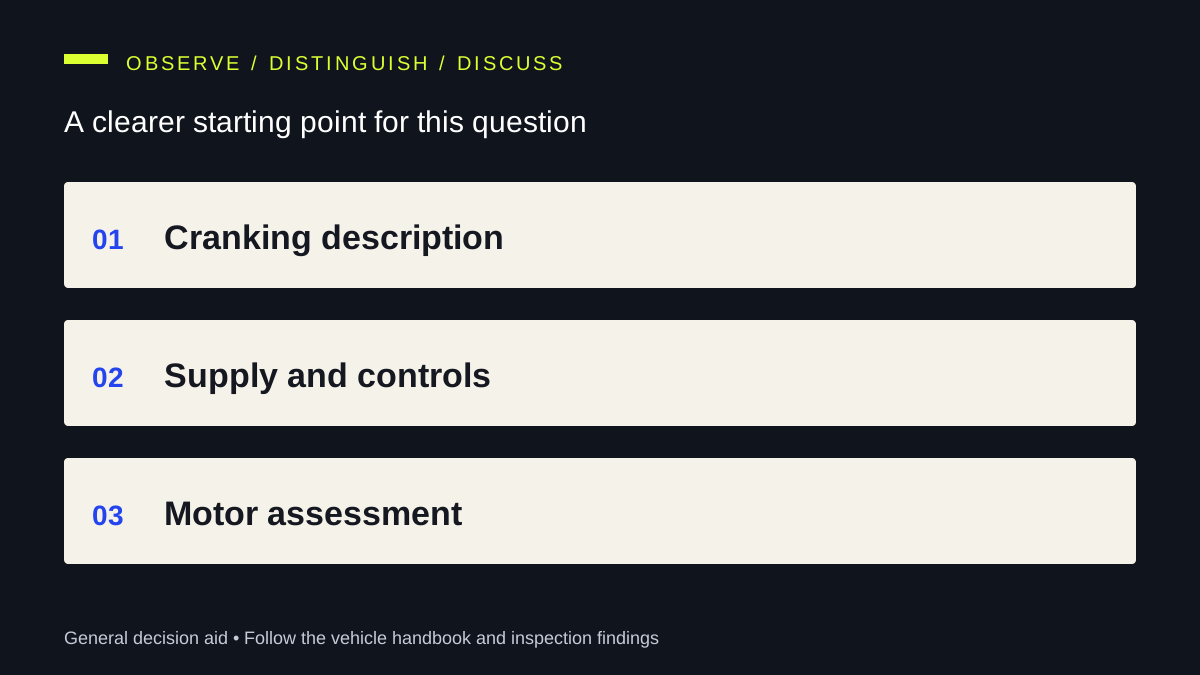
Editorial decision aid. This diagram does not diagnose a vehicle.
Which starter issues involve the relay, battery cables or ignition switch?
The starting request must reach the starter system through the control arrangement fitted to the vehicle. A starter relay, where fitted, is part of that path. The ignition switch or electronic start command is another function. Battery cables carry the supply needed under load. A fault along the path can prevent an otherwise working starter from turning the engine.
DENSO’s diagnostic sequence includes checks of the control circuit and an equipped starter relay against the vehicle manufacturer’s results. These are professional circuit tests, not a recommendation to bridge terminals or substitute a relay because it appears similar.
For a car with a bad starter complaint, describe what happens when you turn the key or make the normal start request. If the engine cranks normally but will not run, that is a different starting stage. The starter motor has produced rotation; fuel, ignition or other engine-running conditions may then need investigation. Identifying the failed stage makes the repair proposal more specific than a list of parts to replace.
How should you describe a no-crank or clicking complaint?
- Record the actual sound and engine movement.
- Stop repeated attempts if the vehicle does not start normally.
- Provide battery and recent repair information.
- Request the test result supporting replacement.
Discuss your vehicle in Sharjah
Describe the cranking behaviour and previous jump-start attempts when discussing starting-system diagnosis.
Useful next steps: car diagnostic service; contact AS Auto Repair Garage Sharjah; How Long Does It Take to Jump a Car Battery?.
Frequently asked questions
Does clicking prove the starter is bad?
No. Supply, connections and the starting circuit can produce overlapping symptoms.
Can a jump start prove the starter is good?
It provides one observation, not a complete assessment of the starting system.
Should I hit the starter to free it?
No. Arrange proper diagnosis rather than striking or bridging components.
Can a starter cause a running engine to stall?
Starting and running faults need to be distinguished. Do not assume the starter explains an unexpected stall.
What if it only fails when hot?
Record that condition and arrange testing. Temperature dependence is a clue, not a part diagnosis.
What are common symptoms of a bad starter motor?
No crank, slow cranking, clicking or a motor sound without normal engine rotation can direct starting-system diagnosis. They overlap with supply, connection, control and engagement faults. Identify the actual condition and support a parts decision with the relevant tests.
What if the starter spins but the engine does not crank?
The sound and actual engine rotation need to be distinguished. The starter drive, engagement mechanism and ring gear form part of the assessment, along with the fitted design. Avoid repeated attempts or striking components; obtain diagnosis of the engagement complaint.
Final answer
- No crank is different from cranking without starting.
- A click alone does not identify a failed starter motor.
- Battery supply, connections and control signals need assessment.