Car Shakes and Check Engine Light Flashes: Next Steps
If your car shakes and the check engine light flashes, stop safely and arrange assistance. The combination can indicate a serious combustion problem. Do not continue a test drive to see whether the shaking clears, and do not assume a spark plug is the only possible cause.
- Shaking with a flashing engine lamp can indicate misfire and possible emissions-system damage. Ford engine-warning instructions.
- Stop safely when possible and obtain vehicle-specific guidance; no universal safe driving distance follows from the warning.
- A misfire code records a condition and does not, by itself, prove that a coil or spark plug failed.
- Keep the original codes and warning sequence for diagnosis instead of clearing the information.
Why is a flashing warning with shaking different from an ordinary vibration complaint?
The warning adds engine-management information to the physical symptom. A car shaking during braking, a tyre-related vibration and an engine running unevenly are different situations. When the engine warning flashes at the same time as rough running, stop safely and arrange assessment rather than treating it as a balancing appointment.
- The Ford warning-lamp instructions associate a flashing engine lamp with possible misfire and potential emissions-system damage. Check the exact instructions for your vehicle. The guide does not set a safe remaining mileage for continued driving.
- Describe whether the shaking is present when stationary, during acceleration or only at a certain road condition. Note whether the lamp was steady before it began flashing and whether power changed. Record what already happened without repeating a demanding drive to reproduce it.
A lamp that stops flashing after the engine load changes does not establish that the fault has been repaired. Preserve the event and request an appropriate diagnosis. Intermittent conditions can leave information worth checking even if the engine feels smoother when you reach a parking place.
What does a misfire code establish about the failed component?
It establishes a detected combustion condition or relevant circuit information, depending on the code. It does not automatically identify the part that should be bought. The exact code, its status and operating context matter more than a paraphrase such as “spark-plug fault.”
The DENSO ignition-system diagnostic guide notes that an ignition-related warning can have a cause elsewhere and begins with visual checks. Coil condition, connectors, contamination and supply need to be considered with the symptoms.
Ask whether the scan indicated a particular cylinder or a broader pattern, and which tests confirmed the proposed repair. If an estimate names a coil, the technician should explain the evidence for that coil rather than rely solely on the presence of a misfire code. Keep the original scan result. Clearing it before inspection can remove useful context, while a later absence of the same code is not proof that the original concern never existed. The workshop should connect the record to the condition you reported, then describe how it checked the result after repair.
How can spark-plug condition help without becoming a complete diagnosis?
A plug's appearance can provide evidence about its operating condition. DENSO's diagnostic chart distinguishes oil fouling, dry carbon, fuel wetting, electrode wear and damaged insulation. Those are concrete findings with different interpretations, rather than interchangeable examples of a “bad plug.”
Ask how the finding compares across cylinders and whether the parts match the specified application. If a plug is oily, establish where the oil was found before removal. If it is worn or damaged, ask what the applicable specification and inspection show.
Replacing a fouled plug can restore ignition without necessarily correcting the reason it became fouled. An estimate should therefore separate the ignition part from any leak, fueling or mechanical concern requiring additional work. Do not assume that a smoother idle immediately after replacement answers every question.
The correct plug type, installation and service requirements are vehicle-specific. Do not apply a universal gap, tightening value or maintenance interval from another engine. A repair record that names the selected part and the reason for replacement is more useful than “changed plugs because the engine light flashed.”
Which other evidence can justify further engine or fuel-system checks?
Further checks should follow the pattern found, not an automatic list of expensive parts. A confirmed ignition component fault calls for one route; an unresolved combustion problem after those checks may call for another. The garage should explain what question each additional test is intended to answer.
- Useful context includes recent refuelling, engine work, recurring oil use, overheating and the conditions when the complaint began. These are leads for investigation. They do not establish contaminated fuel, internal-engine damage or an incorrectly completed repair on their own.
- Ask whether the proposal is to investigate or to replace a confirmed failed part. Compression or leakage testing, fuel-system testing and connector inspection serve different purposes. Request the measured findings and applicable reference if the estimate moves toward a major mechanical repair.
Avoid adding cleaners or changing oil grade to see whether the warning disappears. Changing conditions before the cause is assessed can obscure the complaint. If the vehicle should not be driven, arrange recovery so the workshop can investigate safely rather than asking you to make another road journey for evidence.
What should a post-repair report say about the original flashing event?
It should identify the cause found, the repair performed and the verification relevant to your complaint. A statement that the warning was cleared records an electronic action; it does not by itself establish that the combustion fault was resolved.
Ask which original conditions could be checked safely after repair and whether further monitoring is recommended. If the problem occurred only after warm-up or during acceleration, a short stationary check has a narrower scope. The technician should describe that limit rather than promise certainty from an unrelated test.
Why can spark plugs, ignition coils and fuel injectors lead to similar misfire symptoms?
Normal combustion needs the relevant spark, fuel delivery and mechanical conditions for that engine. A failure in different parts of that process can produce rough running or a misfire record. The record identifies an observed combustion problem; it does not label every cause as an ignition-coil failure.
DENSO ignition-system inspection shows why a coil inspection includes contamination, damage and supply conditions. DENSO plug-condition chart separately describes deposit patterns on spark plugs. Those findings help narrow the investigation when interpreted with the actual engine complaint.
A plug contaminated by fuel and a plug with oily deposits are different observations. Similarly, a damaged coil housing and a supply fault are different reasons for work. A technician may need an applicable fuel-system or mechanical test when the ignition findings do not explain the complaint.
Does a check engine light that stops blinking mean the misfire is fixed?
No. The operating condition or monitoring result may have changed, but that does not identify a completed repair. Keep the sequence clear: the engine shook, the lamp flashed, and the symptoms then changed under a particular load or temperature.
The Ford Fiesta warning-lamp example links a flashing malfunction indication with possible misfire and damaging exhaust temperatures. Its instructions belong to the covered vehicle; use your own handbook for the warning response.
If your car is shaking with a flashing check engine light, stop safely and arrange assessment. Do not deliberately accelerate to find the point at which the lamp begins blinking again. The useful diagnostic information is the event already observed, together with any information retrieved during controlled inspection.
The final check should address the original combustion complaint and any relevant consequence found. Clearing the warning record is an electronic action, not the same as correcting a failed spark, fuel-delivery or mechanical condition.
Flashing warning symptoms and safe next steps
| Evidence | Useful interpretation | What it does not prove |
|---|---|---|
| Flashing lamp and shaking | Potentially serious running fault | One specific failed part |
| Cylinder-related code | Where a condition was detected | Plug failure alone |
| Fault after recent work | Repair history matters | The last repair caused it |
| Lamp temporarily clears | Condition may be intermittent | The vehicle is repaired |
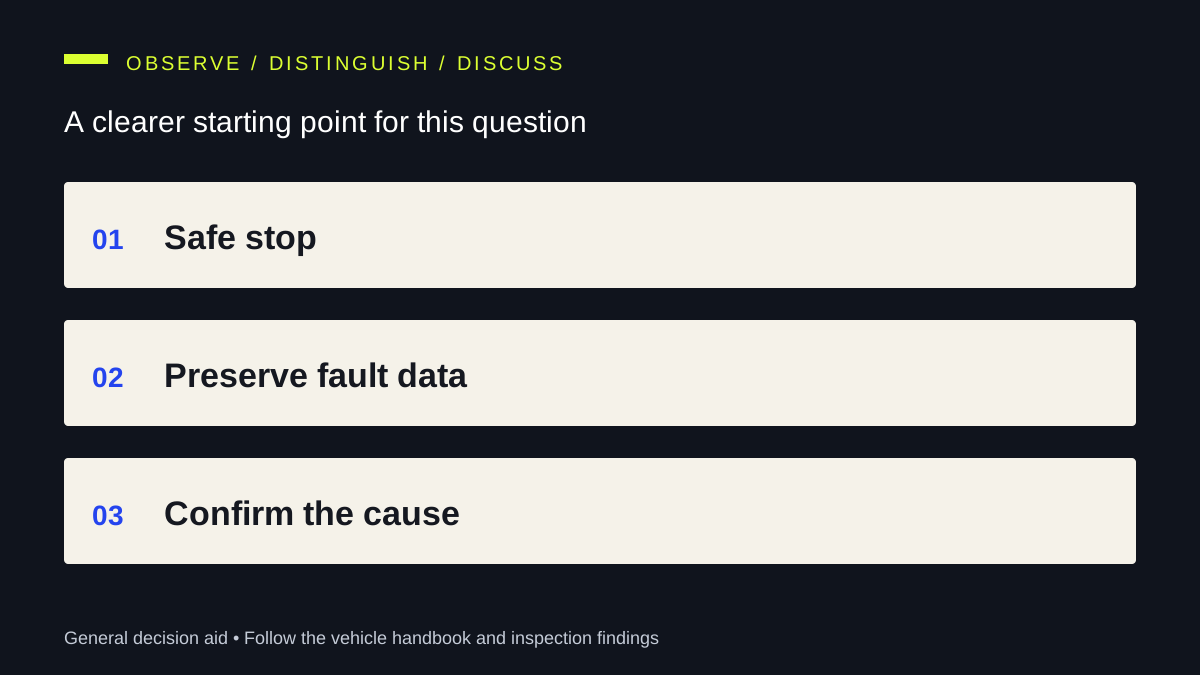
Editorial decision aid. This diagram does not diagnose a vehicle.
What warning and misfire details should you preserve?
- Stop safely and follow the vehicle warning instructions.
- Arrange assistance when the engine is running abnormally.
- Record messages without further road testing.
- Provide recent service and refuelling details.
Discuss your vehicle in Sharjah
Explain that the warning flashes and the car shakes when arranging assistance or diagnosis. Do not reduce the request to a routine plug change.
Useful next steps: car diagnostic service; contact AS Auto Repair Garage Sharjah; Oil on Spark Plug: How to Diagnose and Prevent Engine Damage.
Frequently asked questions
Can I drive gently to make it stop?
Do not continue testing an engine that shakes with a flashing warning. Stop safely and arrange assessment.
Could it be an ignition coil?
It is one possibility, but testing must distinguish it from other causes.
Does the absence of a fuel smell rule out a fault?
No. Smell is not a reliable way to identify or exclude the cause.
Should I clear the codes first?
Preserve them for diagnosis. Clearing data can remove useful context.
Is a steady light always harmless?
No. The exact warning, symptoms and handbook instructions still matter.
Can I drive with a flashing check-engine light and shaking?
Reduce load and stop safely, then follow the vehicle handbook and arrange assistance. The warning can indicate a condition that risks exhaust-system damage. Do not continue to test whether the shaking disappears at higher speed or treat a later steady light as proof of repair.
Is a flashing engine light always a bad ignition coil?
No. A misfire can involve spark, fuel delivery or mechanical condition. A fault code and the affected operating conditions guide further testing; they do not automatically prescribe a coil. The confirmed cause and the post-repair checks should address the original warning and shaking.
Final answer
- A flashing engine warning with shaking needs a safe stopping response.
- A misfire code does not identify the failed component by itself.
- Preserve warning messages and diagnostic data.