How Long Can You Keep Your Car Running While Parked?
How long can you keep your car running while parked? There is no universal safe duration. Fuel remaining, engine condition, exhaust exposure and the place where you stop matter more than a timer. An engine continuing to run does not establish that the situation is safe.
- There is no universal safe idling time. Never run a car in an attached garage, even with the door open. CDC guidance.
- Idling can use 0.25–0.5 US gallon per hour, depending on engine size and AC use. This is a fuel-use reference, not a safe-duration limit. US DOE/EPA guidance.
- Stop safely if temperature or oil-pressure warnings appear; follow the vehicle handbook.
- For an unnecessary wait, switch off and choose a suitable waiting place rather than relying on the engine for cabin comfort.

How long can you leave your car running while parked?
There is no universal safe duration for leaving a car idling. Location, exhaust exposure, engine condition and dashboard warnings matter before elapsed time. US DOE/EPA guidance gives an idling fuel-use reference of 0.25–0.5 US gallon per hour, depending on engine size and AC use; that is a consumption range, not a safe waiting-time limit.
Does fresh air, recirculation or an open window prevent carbon monoxide exposure?
Neither cabin comfort nor the absence of an exhaust smell proves that the air is safe. Carbon monoxide has no colour or smell, according to the CDC's carbon monoxide guidance. A heater or air conditioner can make occupants comfortable without establishing the quality of the air they breathe.
The practical distinction is between changing cabin temperature and controlling the source of exhaust exposure. An open window does not repair an exhaust leak. Recirculation is not a substitute for moving away from a dangerous location. Avoid using a garage, loading enclosure or similarly confined place as somewhere to wait with the engine running.
If someone develops headache, dizziness, weakness or confusion around a running vehicle, leave the exposure area and seek emergency help. Do not remain inside trying different ventilation settings. The CDC lists those symptoms as possible signs of carbon monoxide poisoning; they are not a self-test that can clear the vehicle for continued use.
For a workshop appointment, mention any exhaust smell, damaged exhaust parts, recent exhaust work or symptoms among occupants. These details help identify the inspection needed. They do not turn an open-air parking space into a guarantee against every exposure risk.
How should you distinguish ordinary idling from a warning that needs action?
An engine idling smoothly is one observation. A temperature alert, an oil-pressure warning, smoke or an abrupt loss of power adds a different concern. Follow the warning instructions for the specific vehicle rather than looking for a longer permissible idle duration online.
- Write down the actual symbol or message. “Engine light” can refer to different dashboard warnings, and the distinction matters when arranging help. Note whether the alert arrived before the engine stopped or appeared afterward. A photograph taken safely while parked is usually more useful than a description reconstructed from memory.
- For a temperature complaint, explain whether it occurs with the AC on, in slow traffic, at a standstill or after an earlier coolant repair. For an oil-pressure alert, explain whether the warning persisted while the engine was running. Do not assume that adding oil resolves pressure loss; level and pressure are different measurements.
If the vehicle has automatic stop-start, its controlled engine shutdown is also different from an unexpected stall. Describe what the dashboard showed and whether the car restarted normally using its intended controls. Do not treat an unexpected cutout as normal stop-start operation simply because it happened while you were waiting.
What can you prepare before asking a garage to investigate overheating at idle?
Prepare an event description rather than a requested replacement part. Include the vehicle model, engine, recent cooling-system work, dashboard message and the conditions when it happened. If you already have service invoices, bring them so the garage can see what coolant or components were used.
Ask whether the inspection will include fan operation, coolant leaks, radiator airflow and evidence of circulation. The HELLA diagnostic sequence makes clear that cooling complaints require checks across the system. Replacing the thermostat without testing the rest is not the same as establishing why the vehicle overheated.
An estimate should connect the finding to the event: what failed the test, what specification was used and what the repair is expected to change. Ask how the workshop will confirm the result under an appropriate controlled condition after repair. It should not require you to recreate the overheating on the road. The outcome you need is a functioning cooling and exhaust system, plus a sensible waiting plan. An arbitrary maximum idle time cannot supply either. Even after a repair, choose a suitable place to wait and never leave vulnerable occupants dependent on a parked vehicle's climate control.
Can you recognise an exhaust-exposure problem by smell?
You cannot use smell as a carbon-monoxide test. CDC carbon-monoxide guidance describes carbon monoxide as colourless and odourless and lists headache, dizziness, weakness and confusion among poisoning symptoms. A person becoming unwell while waiting in or near a running vehicle needs a response to possible exposure, not an experiment with the air-conditioning controls.
Leave the suspected exposure area for fresh air and seek urgent medical help if poisoning is suspected. Do not stay inside to see whether opening a window improves the feeling. The absence of a warning on the dashboard says nothing about the air being breathed, because an engine-management warning and a carbon-monoxide exposure assessment answer different questions.
Is leaving a car running while parked different from parking with the engine off?
Yes. An engine that is off is not producing engine exhaust at that moment; an idling combustion engine is operating even though the wheels are stationary. Questions about leaving a parked car unused concern storage and battery condition. Questions about leaving your car running concern exhaust, fuel use, temperature and the surroundings. They need different answers.
For an enclosed or partly enclosed parking space, the immediate issue is exposure. CDC carbon-monoxide guidance warns about vehicle exhaust in attached garages. Moving air through the cabin or opening a garage door is not a measurement of exposure. Do not leave a combustion engine running in that setting while waiting for a timer to expire.
Outside, the surroundings still matter. A wall close to an exhaust outlet, nearby occupants or another running vehicle changes the situation. A general guide cannot assess the airflow at your parking place. Choose a waiting arrangement that does not depend on people remaining beside an operating exhaust.
Why do car idling, air conditioning and cooling fans interact?
Air conditioning adds an operating demand while the car remains stationary. Cabin cooling and engine cooling also need heat to leave the vehicle. Road movement changes airflow, so a car that seems normal while travelling can show a cooling complaint when parked.
HELLA cooling-system diagnostics distinguishes airflow restrictions, fan operation, temperature indication and circulation. The useful question is which part of that chain fails under the reported conditions. A radiator fan command on a scan tool is one signal; actual fan operation is another.
Make your description specific: air from the vents became warmer, the temperature gauge rose, or both happened. Include which change came first. This gives the technician an operating pattern to investigate instead of an assumed maximum number of minutes that every car may idle.
Do not substitute repeated stationary running for an inspection. Once a temperature warning or unsafe change appears, stop safely and arrange assistance. An apparently normal period before the warning does not establish a safe waiting allowance for the next day.
Idling conditions and their risks
| Situation | What it tells you | Better response |
|---|---|---|
| Engine running in a garage | Possible exhaust accumulation | Switch off; move away from exhaust |
| Temperature warning while waiting | Cooling needs attention | Stop safely; follow the handbook |
| Waiting only for comfort | No fault established | Choose a suitable waiting area |
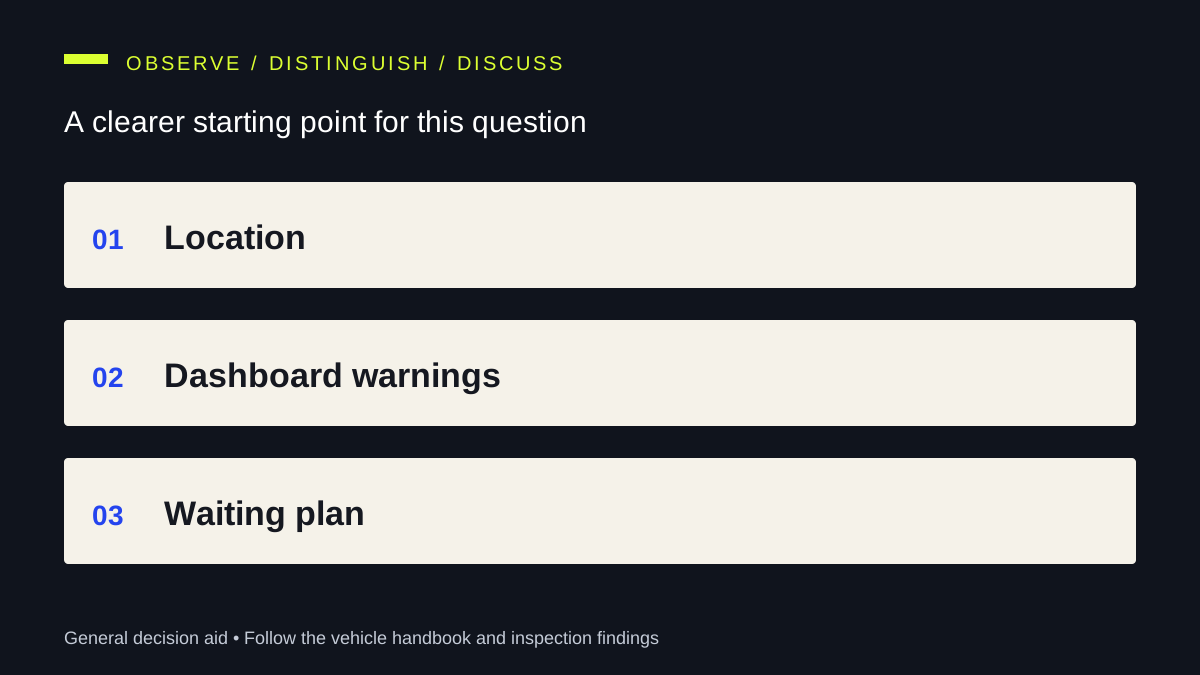
Editorial decision aid. This diagram does not diagnose a vehicle.
Which idling observations help a cooling or exhaust inspection?
- Identify a safe, legal parking place.
- Check the dashboard before settling in to wait.
- Switch off when continued running is unnecessary.
- Record any warning or unusual behaviour for the workshop.
Discuss your vehicle in Sharjah
For recurring overheating or warm AC at idle, book a diagnostic visit and describe the stopped-versus-moving pattern.
Useful next steps: car diagnostic service; contact AS Auto Repair Garage Sharjah; Car AC Only Blows Cold When Driving? Why & What To Do.
Frequently asked questions
How much fuel does idling use?
US DOE/EPA guidance gives a reference of 0.25–0.5 US gallon per hour, depending on engine size and AC use. This is a consumption range, not a safe idling time. US DOE/EPA guidance.
Can I leave the engine on all night?
Do not use overnight idling as a sleeping or accommodation plan. Exhaust exposure, fuel and vehicle condition create uncertainties that a timer cannot resolve.
Does opening a window remove the risk?
No. An open window does not establish that exhaust cannot reach the occupants.
Is an open garage door enough?
No. CDC specifically advises against running a vehicle in an attached garage even with its door open.
Can idling fix a weak battery?
It is not a substitute for a battery and charging-system assessment. The reason for the low charge still needs to be established.
Why does the AC warm up while parked?
Airflow and compressor operation can change at idle. Record the pattern rather than assuming the refrigerant needs topping up.
Is it okay to leave a car running while parked with the AC on?
Only the actual surroundings and vehicle condition can support that decision; there is no universal safe duration. An enclosed or partly enclosed location creates an exhaust concern, while rising temperature or an oil-pressure warning requires a safe stop. AC comfort does not measure exhaust exposure.
How is a parked car with the engine off different from an idling car?
With the engine off, the combustion engine is not producing exhaust at that moment. Idling keeps combustion, fuel use and heat generation operating. Storage and battery-maintenance advice for a car parked unused therefore cannot be used as an idling allowance.
Final answer
- US DOE/EPA guidance gives a reference of 0.25–0.5 US gallon per hour, depending on engine size and AC use. This is a consumption range, not a safe idling time. US DOE/EPA guidance.
- A temperature or oil-pressure warning changes the decision: follow the vehicle handbook and stop safely.
- Do not leave children or other vulnerable occupants in a parked vehicle.