Car Alarm Keeps Going Off Randomly: What to Check
If your car alarm keeps going off randomly, start with the trigger pattern. A door input, cabin movement sensor and power-supply fault lead to different inspections. Replacing the alarm or disconnecting a fuse before identifying the trigger can create another problem.
- Random alarm activation can involve the fitted perimeter or interior sensing; record whether movement, locking or a door event preceded it.
- In Ford’s described alarm system, full guard enables cabin movement sensing and reduced guard disables it for the current locking cycle. Ford owner manual.
- A coded-key immobilizer controls starting authorization; it does not explain every audible alarm event.
- Record the trigger history and confirm the fitted alarm system before replacing a sensor or battery.
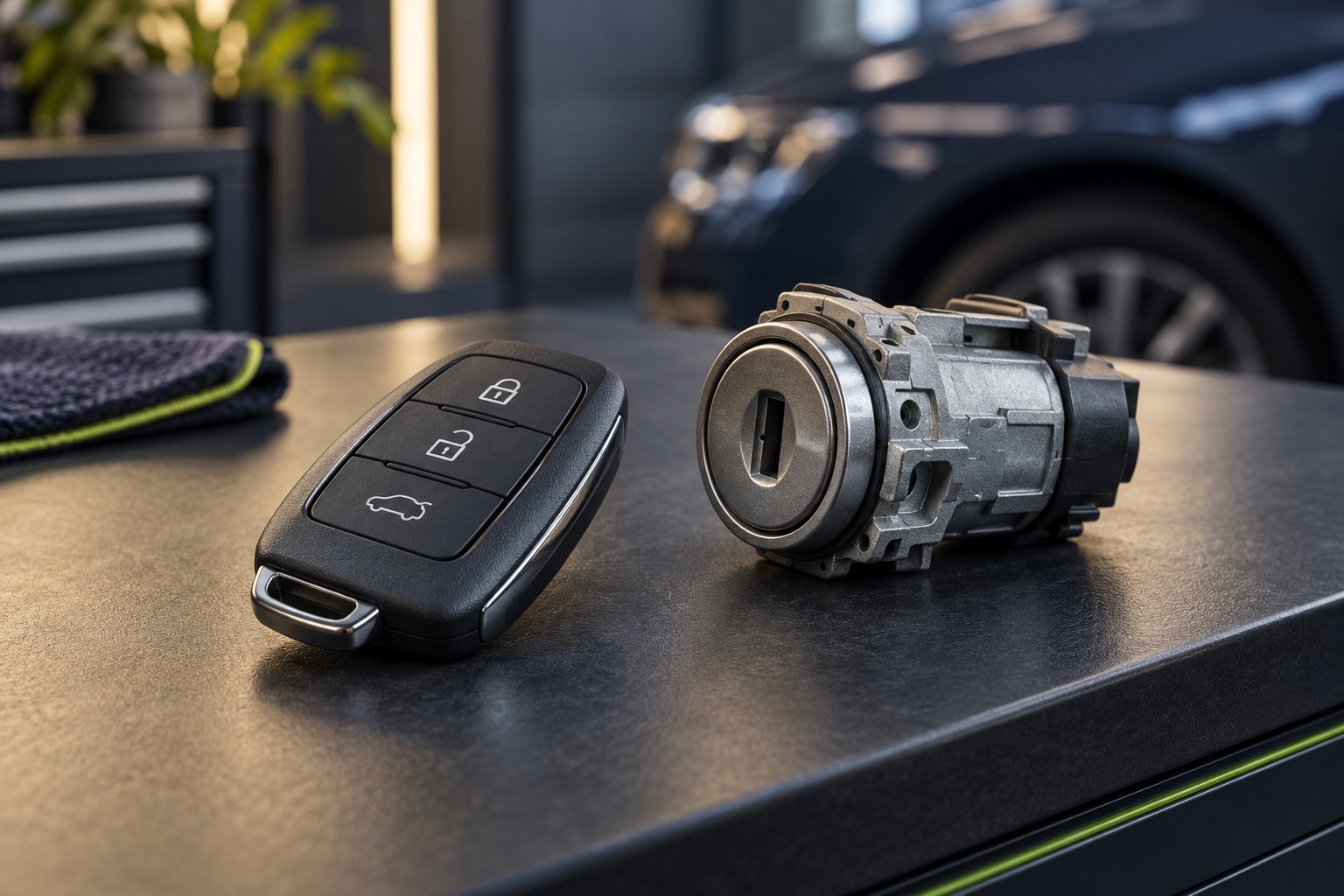
What are common causes of car alarms going off randomly?
Separate the perimeter alarm from interior movement detection and any tilt detection fitted to the car. A false hood-open input, movement inside the cabin and a sensor reacting to the vehicle being lifted are different trigger paths. They should not be investigated by ordering the same replacement alarm module.
- The Ford anti-theft alarm manual explains a model-specific arrangement with perimeter and interior sensors. Its perimeter protection watches access through openings such as doors and the hood, while the interior sensors react to movement. Other vehicles can have different equipment. Start by confirming your own car's system and whether an aftermarket alarm has been added.
- When the alarm sounds, record any message without opening or disturbing the vehicle unnecessarily. If the dashboard sometimes reports an opening as unclosed even when it is physically shut, mention that observation. It gives the workshop an input to check, rather than proving that the whole alarm is defective.
Do not wedge a latch switch, bridge wiring or permanently disable a sensor to suppress the sound. Those changes can affect security or other functions and make diagnosis harder. The useful goal is to identify the trigger and correct the underlying input.
Why can the alarm react when nobody is touching the car?
An armed system reacts to sensor inputs, not to your assessment that the parking place is quiet. An interior detector can see movement that was not intended as an intrusion. The Ford example specifically warns against arming full guard with people, animals or moving objects inside and says not to cover the sensors.
Check the ordinary conditions before assuming an electronic defect. Were windows left open? Was an object hanging or moving in the cabin? Was someone still inside when you locked the doors? These are booking questions, not a recommendation to conduct repeated alarm-triggering experiments in a public car park.
An episode after rain, a battery replacement or bodywork repair provides a separate lead. Ask for the affected opening sensors, connectors and recent work to be considered. A timing association does not prove water damage or an incorrectly installed part, but it can explain why the complaint began when it did. Keep a short event log: parked location, weather, recent use, whether the vehicle had been locked with the remote and what happened immediately before the alarm. A regular pattern is more useful than “it always happens randomly.” Avoid publishing footage that exposes your vehicle's security arrangements when you only need to send a brief description to the garage.
Is the battery, remote key or immobilizer the same as the alarm?
No. A battery supplies electrical power; a remote key can command locking and unlocking; an immobilizer controls whether an authorized key can start the engine. The alarm warns of defined events. Depending on the vehicle, these systems interact, but a complaint in one does not identify a failure in all of them.
- A car that locks but later sounds its siren presents a different question from a car that does not recognize the key or crank. Describe each symptom separately. Include whether both available authorized keys behave the same way, whether remote range has changed and whether the dashboard reports a security message.
- If the battery has recently gone flat or been disconnected, record it. Ask for battery condition and relevant electrical supply checks rather than assuming that a new battery will stop every false alarm. The DENSO starting-system guide illustrates why battery condition, terminals and circuit resistance must be distinguished in an electrical complaint; it is not an alarm-specific diagnostic procedure.
Do not swap random fuses or disconnect power as a routine overnight solution. Apart from interrupting protection, it may remove useful diagnostic context or require vehicle-specific initialization. Ask the workshop which information should be preserved before electrical work begins.
What should a useful alarm diagnosis and estimate include?
The useful output is the trigger path found and the evidence for it. Ask whether the system stores alarm-event history, whether relevant fault codes were present and whether the suspected input changed incorrectly during a controlled check. Some vehicles provide more event information than others, so the answer should be specific to your model.
An opening sensor fault should lead to an explanation of that sensor, latch or wiring. A power-supply problem should lead to the relevant electrical findings. An aftermarket installation should be examined using its own documentation as well as the vehicle wiring information. The estimate should identify which system the quoted parts belong to.
Ask how the repair will be checked after completion. An intermittent alarm may need an agreed observation period; “it did not sound during collection” is a narrower finding than confirming that the original trigger is resolved. Agree what to do if the same symptom returns. Before authorizing a replacement alarm unit, request the reason simpler input or wiring faults were ruled out. This is not an argument against replacing a failed unit. It is a way to ensure the proposed repair addresses your complaint and preserves the security functions that should remain available afterward.
What should be checked after an alarm-related repair?
The check should cover the function repaired and the protection that must remain active. Correcting a panel switch should not leave the owner with an alarm that is simply disabled. Resolving a remote-control issue should also be distinguished from proving that every interior sensor works.
- Identify the input or function that failed inspection.
- Document the repair or approved setting change.
- Check the applicable arming, locking and unlocking operation.
- Explain any remaining intermittent symptom and the follow-up needed.
For an intermittent alarm, keep a brief event log after collection if the workshop requests one. Record the actual setting and vehicle condition rather than assuming yesterday’s reduced-guard selection still applies. Avoid leaving children or animals in a parked car to test an interior sensor. The test method belongs to the vehicle procedure and the technician performing it.
Can a key fob or door latch make a car alarm keep going off?
A key fob, a door latch input and an interior movement sensor perform different jobs. The fob sends a locking or unlocking request. A panel input reports whether the protected opening is closed. An interior sensor monitors the space that the fitted alarm is designed to protect.
The Ford alarm handbook example explains the protected openings and monitoring options for its vehicle. If a bonnet or door looks shut but the corresponding input changes, the alarm may receive a trigger that the owner cannot see. A remote-control problem can instead affect arming or disarming. Those patterns should be described separately.
Notice whether ordinary locking works, whether the dashboard reports an opening and whether an available spare authorized remote behaves differently during normal use. A damaged button or unreliable remote deserves inspection. Do not dismantle security components or repeatedly trigger the siren to test a theory.
Should you disconnect a car alarm or reset it after a night-time trigger?
Use the documented disarming procedure for your own vehicle. Disconnecting a car alarm, removing a fuse or disconnecting the car battery can affect other functions and discard useful information. A general reset sequence copied from another model is not a repair for the original trigger.
If the handbook offers an interior-monitoring setting such as reduced guard, understand which protection changes and how long the selection applies. The Ford alarm handbook example is an example of why a setting must be interpreted in its own system. A quieter night after a setting change is a clue about the monitored conditions, not a complete component diagnosis.
For a car alarm going off at night, note the actual setting, whether windows were open and whether anything could move inside. Add any link with rain, washing or recent battery work. The pattern may direct inspection toward an input, connection or supply issue.
Arrange repair if the trigger recurs. The aim is normal arming and reliable protection, rather than an alarm that has simply been disabled to silence it.
Alarm triggers and useful observations
| Observation | Possible inspection route | What to record |
|---|---|---|
| Door-open message | Latch or input circuit | Which door and when |
| Alarm after cabin movement | Interior sensor configuration | Windows and objects inside |
| Alarm plus slow cranking | Power supply and connections | Starting behaviour |
| Problem after accessory fitting | Installation review | Equipment and fitting date |
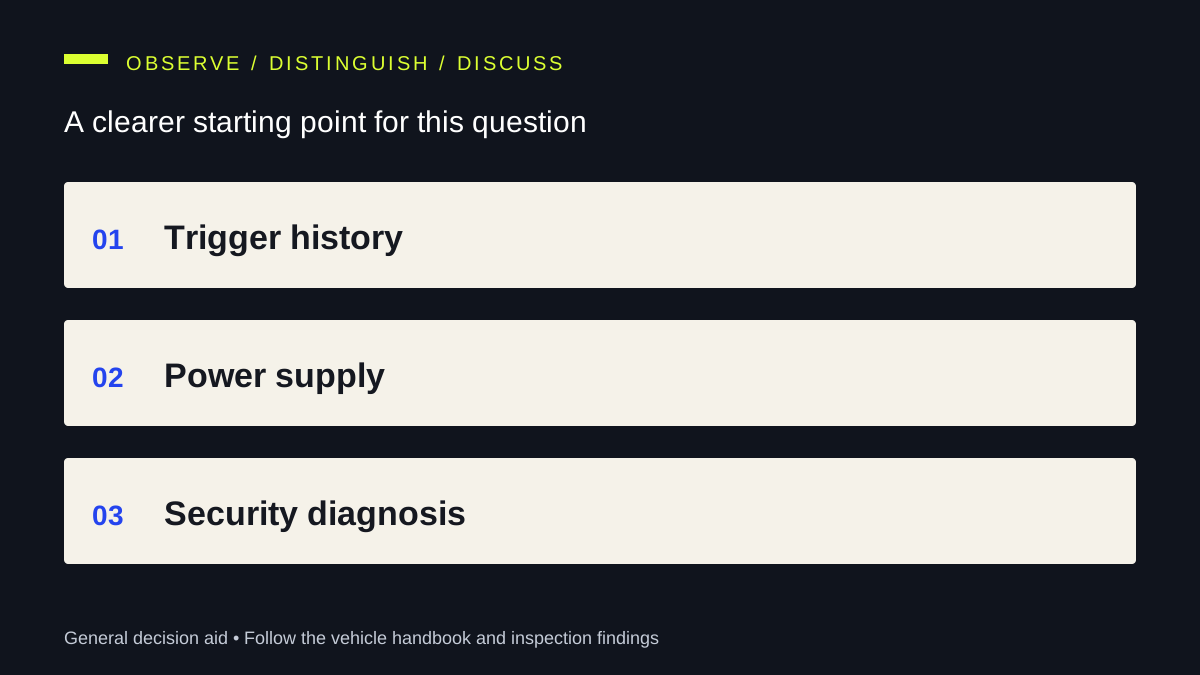
Editorial decision aid. This diagram does not diagnose a vehicle.
What trigger pattern should you report to the alarm technician?
- Find the alarm section of the handbook.
- Record the time and conditions of each event.
- Photograph any dashboard message when parked.
- Bring all normal keys and accessory details to the appointment.
Discuss your vehicle in Sharjah
For an alarm that keeps triggering, bring the event history and available keys to an electrical assessment.
Useful next steps: car diagnostic service; contact AS Auto Repair Garage Sharjah; What Is a Passive Disabling Device? Meaning, Examples, and How It Works.
Frequently asked questions
Does a false alarm prove the battery is bad?
No. Battery testing is useful when there are related electrical symptoms, but the alarm trigger needs investigation.
Could rain be relevant?
Yes, record the connection with wet weather or washing. It is a diagnostic clue, not proof of water damage.
Will a new key fob fix it?
Only if testing establishes a problem with that key or remote. A vehicle sensor fault will need a different repair.
Should I unplug the alarm?
Do not bypass the system. Use the handbook procedure and arrange assistance if it cannot be silenced or secured normally.
What if it happens only at one parking location?
Record that pattern and any nearby vibration or movement. Avoid declaring a sensor faulty from location alone.
Why does my car alarm go off in the middle of the night?
Look for a recurring condition: interior movement, rain or washing, a panel input, nearby vibration or an electrical complaint. Night-time alone does not identify a faulty part. The fitted alarm’s trigger history, where available, is more useful than replacing a key fob because the siren sounded.
How can I stop my car alarm from randomly going off?
Disarm it using the vehicle’s handbook procedure, secure the car normally and arrange diagnosis of the trigger. A documented monitoring setting may help identify a pattern. Removing security fuses or applying an unrelated reset sequence can silence the symptom while leaving the fault and protection problem unresolved.
Final answer
- Record when the alarm sounds and what happened immediately before it.
- Check the handbook for the alarm equipment fitted to your vehicle.
- A weak remote battery and a weak vehicle battery are different faults.