How Long Does a Tire Plug Last? Repair Limits Explained
How long does a tire plug last? A mileage promise cannot establish whether the repair is suitable. The first question is whether the tire was removed, inspected and repaired using an approved method for its damage and manufacturer requirements.
- A plug-only repair has no defensible universal mileage lifespan. Michelin warns that an on-wheel plug-only repair is unreliable because internal damage needs inspection. Michelin repair guidance.
- A tire plug has no universal guaranteed lifespan; repair eligibility and the method matter. USTMA requires a tread puncture no larger than 1/4 inch (6 mm), with the tire removed for inspection. USTMA repair guidance.
- The inner liner must also be sealed with a patch. USTMA: tire repair basics.
- Remaining tire condition, prior low-pressure driving and manufacturer repair restrictions determine whether an inspected repair remains serviceable.
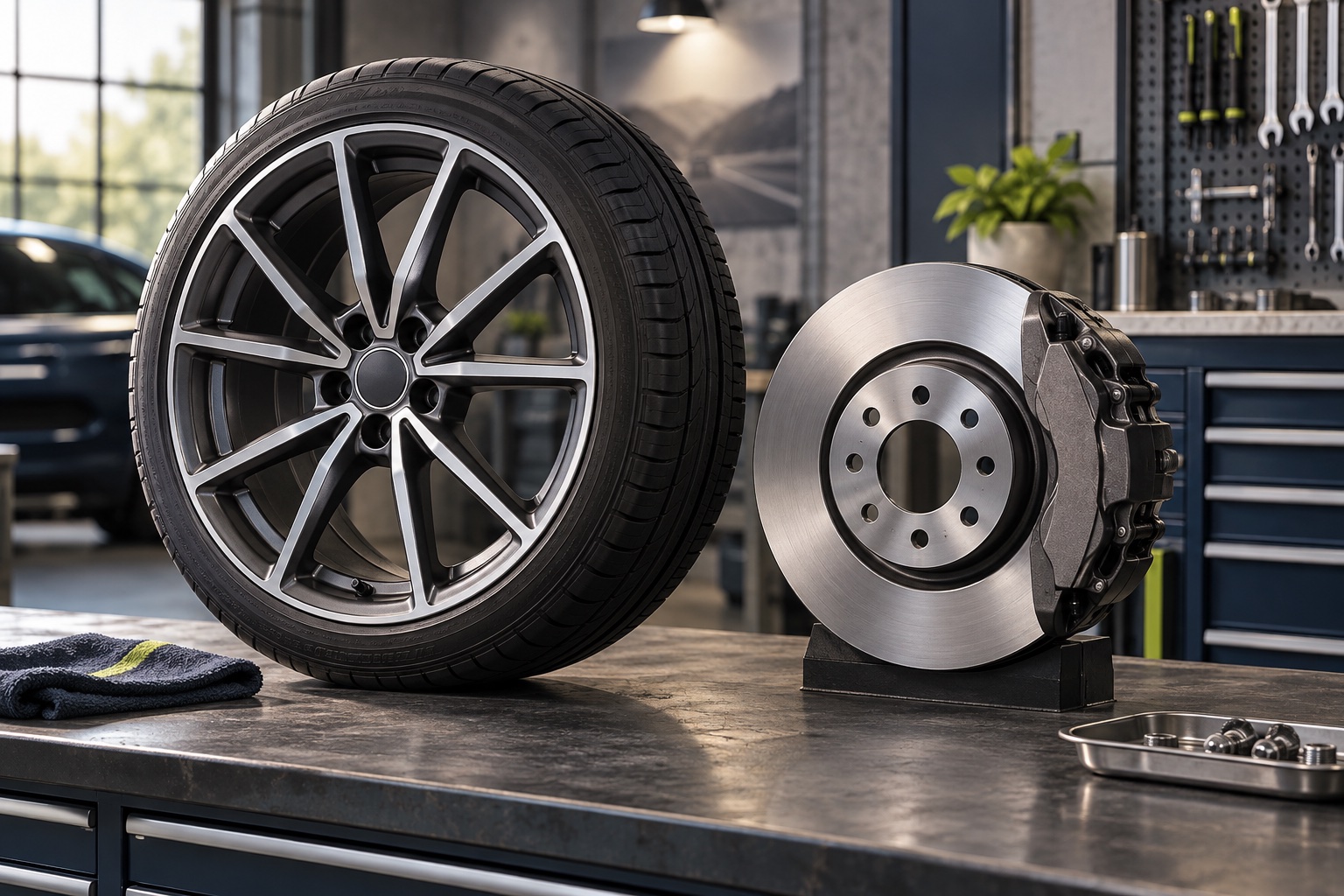
What limits apply when a mechanic repairs a car tire puncture?
Michelin warns against repair when tread is worn below 2/32 inch in its US guidance. Michelin US repair criteria; not a UAE legal limit
A tread puncture may be repairable after removal and internal inspection; a plug inserted from outside does not complete that assessment. The puncture channel and inner liner need separate sealing functions. The manufacturer’s repair policy still applies to the exact tire.
Which puncture details change the repair decision?
The location, diameter and path of the injury matter. Under USTMA's passenger and light-truck guidance, a repairable puncture cannot exceed 1/4 inch, equivalent to 6 mm, and must stay within the permitted tread area. An injury extending toward the shoulder or belt edge is outside that scope.
The visible entry point does not show the whole path. An object can enter at an angle, and the internal damage can differ from what you see on the outside. That is one reason removal and inspection matter more than looking at the nail while the tire is on the car.
There are also restrictions on prior repairs and overlapping repairs. The tire manufacturer's policy can be more restrictive, particularly for some run-flat tires or specific applications. Ask which policy is being applied to your actual tire rather than accepting “all punctures can be plugged.”
Repairability and overall serviceability are related but separate questions. A puncture that falls in the permitted tread area does not automatically make a heavily worn or otherwise damaged tire worth repairing. Have the technician identify any other reason for replacement and explain it separately from the puncture itself.
Why does driving with low pressure matter even if the hole is small?
The history of the pressure loss can change the condition found inside the tire. A small visible hole does not reveal what happened while the vehicle continued to run with insufficient inflation. Tell the shop whether the tire became visibly flat, how you noticed it and whether you drove after the warning.
- The NHTSA tire-safety guidance emphasizes correct pressure and condition checks. Use the vehicle's tire placard or handbook for the specified operating pressure. The maximum figure on a tire sidewall serves a different purpose and should not be substituted for the vehicle's recommendation.
- If the pressure warning returns after a repair, do not assume that the sensor is wrong. The tire, valve and wheel assembly need a leak assessment, and the monitoring system may require its own check. A dashboard alert and a pressure measurement are separate pieces of evidence.
Never use a freeway journey as a trial of an uncertain repair. If the tire cannot retain pressure, has visible damage or the handling changes, arrange help. The purpose of an inspection is to make a repair-or-replacement decision before continued use, not to see how long the questionable tire survives.
Does a repair restore the original speed rating or erase tire wear?
Do not assume that a puncture repair restores every original rating or removes all manufacturer restrictions. USTMA directs users to the tire manufacturer's repair policies. Confirm those policies for the tire brand and model, as well as the type of use the vehicle will see.
A repair also does not renew the tread or reverse ageing and damage elsewhere. Ask for the tire's general condition to be recorded alongside the injury assessment. If replacement is proposed, request the reason: unsuitable puncture location, internal damage, prior improper repair or overall condition. Those reasons lead to different decisions and should not be collapsed into “the plug is old.”
Balancing addresses the assembled wheel's balance; it does not make an unsuitable puncture repair safe. Alignment concerns the vehicle's wheel geometry and likewise is not a substitute for repairing a leak. These services can be relevant to other symptoms, but the estimate should explain their separate purpose. If only one tire is being replaced, ask about the vehicle manufacturer's tire-matching requirements. The appropriate decision depends on the existing set and drivetrain instructions. A universal rule to replace either every tire or only the punctured one would ignore the specifications that matter for the actual vehicle.
What evidence should you ask for before accepting repair or replacement?
Ask for the injury location, repair method and any internal findings. A photograph of the inspected inner surface is more informative than an assurance that the tire is “fine.” You do not need to diagnose the casing yourself; you need the technician to explain which criterion led to the recommendation.
For a repair, confirm that the policy permits it and ask what to monitor afterward. For replacement, identify the proposed tire specification and any matching requirement. If an old repair was improper, ask the shop to describe it, rather than attempting another improvised outside repair.
What should be inspected inside a tire before a puncture repair?
The outside hole is only part of the assessment. USTMA tire-repair guidance calls for removing the tire from the wheel and inspecting it before repair. An injury that looks small from the tread can coexist with damage caused while the tire was underinflated.
Tell the provider whether you continued driving after the warning or noticed the tire was flat. Give the approximate circumstances without guessing the remaining pressure. The technician needs to inspect the inner liner and structure rather than infer their condition from the fact that a temporary plug is now retaining air.
Do not remove the object or an existing repair to make your own examination before the tire shop assesses it. Explain what was previously fitted and when. A repair assessment should distinguish the puncture itself, previous repairs and the tire’s broader serviceable condition. An internal finding that makes repair unsuitable needs to be explained as such, rather than described only as a preference for replacement.
Is a tire plug a permanent fix, or does the tire need a patch?
A plug pushed in from outside is not the same as a completed, inspected puncture repair. Michelin repair guidance requires inspection with the tire removed from the wheel and describes a combined repair of the injury and inner liner for an eligible puncture.
The plug portion fills the injury channel. The patch portion seals the liner on the inside. Together they address parts of the damage that an outside-only plug cannot fully assess. The repair still depends on eligibility: material added to an unsuitable puncture does not make the tire suitable.
This explains why the question “how long does a tire plug last?” needs the method first. A properly assessed tire repair and an unidentified roadside plug are not equivalent items to which one lifespan can be assigned.
Can a plugged tire hold pressure but still need replacement?
Yes. Air retention is a sealing result, while tire serviceability also involves the casing, sidewall, tread and injury history. A tire that holds air after a repair can still have damage elsewhere or restrictions under its manufacturer’s policy.
USTMA repair criteria makes inspection part of deciding eligibility. Tell the tire technician if the vehicle was driven flat or substantially underinflated, if sealant was used, or if another repair was already present.
Ask whether the existing repair can be identified and whether the inside condition supports keeping the tire in service. If the answer is replacement, the relevant reason should be named: injury location, internal damage, unsuitable previous work or general tire condition.
A new tire is not automatically required for every eligible tread puncture, and another plug is not automatically appropriate for every recurring leak. The condition and approved repair method decide the next action. Report new pressure loss, a bulge or vibration promptly instead of relying on a guessed distance allowance.
tire repair methods and their limits
| Condition | What it means | Next question |
|---|---|---|
| External plug only | Internal condition may be unknown | Was a full inspection done? |
| Suitable inspected repair | Repair criteria were assessed | What manufacturer limits apply? |
| Sidewall or shoulder injury | Outside USTMA tread-repair scope | Does the tire need replacement? |
| Repeated pressure loss | Fault remains unresolved | Where is the leak? |
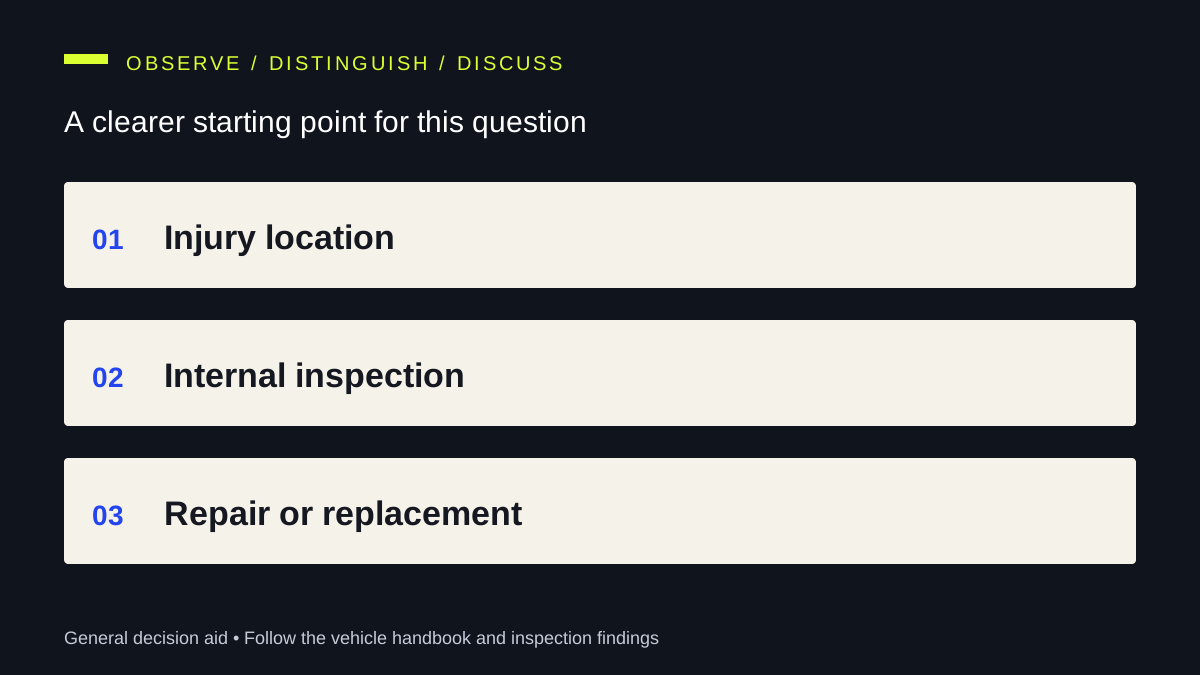
Editorial decision aid. This diagram does not diagnose a vehicle.
What should the tire technician know about the puncture?
- Record whether the tire was driven flat.
- Ask for inspection off the wheel.
- Request the repair method and findings.
- Confirm pressure and any manufacturer restrictions.
Discuss your vehicle in Sharjah
Ask the tire repairer to explain the injury, internal condition and repair criteria before you accept a plug or replacement.
Useful next steps: tire puncture repair service; contact AS Auto Repair Garage Sharjah; Car Shakes When Braking at High Speeds? Causes and Solutions.
Frequently asked questions
Is a plug-only repair permanent?
Do not assume so. USTMA guidance requires both filling the injury and sealing the inner liner after inspection.
Can a sidewall puncture be plugged?
USTMA guidance does not treat sidewall punctures as repairable tread injuries. Ask for a replacement assessment.
Does holding air prove the tire is safe?
No. Pressure retention alone does not show whether there is hidden structural damage.
Can a repaired tire be balanced?
Balance and repair suitability are separate questions. Balancing does not correct an unsuitable repair.
Should I replace every tire after one puncture?
Not automatically. The damaged tire and the vehicle manufacturer’s matching requirements must be assessed.
Can I drive a long distance with a plugged tire?
Do not assign a distance allowance to an unidentified plug. Have the tire removed and inspected, and establish whether it meets the tire manufacturer’s repair criteria. A combined eligible repair differs from an outside-only roadside plug; holding pressure alone does not establish the inside condition.
Can a plugged tire cause a blowout?
This guide cannot predict a particular failure. An unsuitable repair, hidden damage or continued underinflation can leave a tire unfit for service. A bulge, recurring leak or vibration needs assessment rather than reassurance based on how long the plug has already held air.
Final answer
- A plug inserted from outside is not the same as an inspected combination repair.
- Damage location and internal condition matter more than the age of the plug.
- Repeated pressure loss needs attention even if the tire looks normal.