Car Shakes When Braking: What Needs Checking?
If your car shakes when braking, note whether the vibration begins only with brake application or is already present at the same road speed. The distinction helps the workshop plan its inspection. It does not prove that the brake discs are warped.
- Shaking under braking can involve disc condition, hub mounting or caliper-related findings; tyre and wheel faults can overlap.
- Brembo identifies dirty mounting hubs, hub runout and uneven wear as distinct brake-disc concerns. Brembo maintenance guide.
- Separate vibration in the pedal, steering wheel and whole vehicle when describing the complaint.
- A changed pedal feel, brake warning or reduced braking ability calls for a safe stop and assessment.
Does vibration only during braking prove that the discs are warped?
No. The timing makes the braking event relevant, but it does not establish a particular disc fault. A workshop needs to assess the braking components and the wheel or running-gear conditions that can affect the symptom.
- Brembo's brake-disc guide treats vibration as an inspection problem, rather than permission to fit parts from the driver's description alone. Disc condition, assembly and associated components need to be considered through the appropriate checks.
- Ask what was measured if the estimate uses the word “warped.” The relevant dimensional result and vehicle specification should be explained. An assumed defect and a measured failure are different bases for repair. Runout and minimum disc-thickness limits must match the fitted brake application.
If braking performance, direction control or pedal behaviour changes, stop safely and arrange help. A vibration that began recently should not be reproduced at higher speed for a clearer video. The workshop can choose the appropriate controlled inspection without requiring the customer to create a more demanding road event.
Why should you describe steering-wheel, pedal and body vibration separately?
They describe where you felt the symptom, which helps the technician plan the assessment. They are not direct identifiers of a failed component. Steering-wheel shake does not automatically mean front discs, and a body sensation does not automatically mean rear brakes.
Note whether the vehicle also vibrates when you are not braking, whether the event changes after warming and whether it follows recent wheel or brake work. A symptom present during steady travel adds a different question from one observed only as the brakes are applied.
Keep any sound, pull or warning separate in the booking description. A rhythmic vibration, scraping sound and altered pedal travel can have different inspection needs. Saying “the brakes shake” without those distinctions can make the initial scope too broad or too narrow. Do not diagnose the axle from sensation alone. Ask the workshop how its measurements and physical findings connect to the symptom. The useful outcome is an explanation of the actual fault and associated work, rather than a parts choice based on where the driver thinks the vibration originated.
How can recent wheel or brake work change the inspection priorities?
It gives the technician a reason to examine the serviced areas and assembly conditions. It does not automatically prove that the previous work caused the problem. Provide the date, invoice and exact work rather than only saying “it happened after service.”
A wheel-balancing service, tyre replacement and brake-disc replacement are different tasks. Each can leave a different set of relevant checks. The NHTSA tyre guidance explains why tyre condition and appropriate pressure still matter alongside a brake complaint.
Ask whether the hub, mounting condition, wheel and brake components were assessed where relevant. Replacing another disc without examining the reason for a recurring symptom may leave the inspection incomplete. The estimate should identify what failed and how the related condition will be addressed.
Do not retighten wheel fasteners by guesswork or apply a universal torque from another car. The correct procedure belongs to the vehicle and fitted components. If you suspect an assembly problem, arrange an appropriate check before further use rather than testing the car's limit during braking.
What should the garage measure instead of simply recommending discs?
The required measurements follow the fitted braking system and the physical findings. Ask for the recorded disc condition, applicable dimensions or limits and any relevant caliper or mounting findings. A vague statement that the brakes are “uneven” leaves the decision unexplained.
- Brake pads and discs work together, but that does not mean every related component should be replaced without inspection. Ask which parts failed a criterion, which are being renewed as part of the specified repair and why. If a caliper or another component is involved, its function and fault should have its own explanation.
- Fluid maintenance is another separate issue. A brake-fluid change does not correct an unidentified dimensional or assembly problem. Conversely, a pedal or hydraulic concern should not be dismissed merely because the discs are being replaced. Each complaint needs the appropriate evidence.
A written estimate can therefore list findings before parts: measured condition, proposed corrective work and the verification planned. It makes the reasoning easier to assess and helps you understand why a quotation differs from a basic pad replacement or a routine fluid service.
How can the post-repair check address a recurring braking vibration?
It should compare the repaired vehicle with the original conditions using an appropriate controlled check. Ask what the workshop verified and whether any associated tyre, wheel or running-gear concern remains. A newly fitted disc is evidence of work performed, not proof that every cause of vibration was eliminated.
If the symptom was intermittent, ask how the limitation was handled. A short test that did not reproduce it is a narrower result than a documented repair of a measured fault. Clear reporting is especially useful when a previous replacement did not resolve the complaint.
Are brake rotors, disc thickness variation and runout the same thing?
A brake rotor is also called a brake disc. Thickness variation describes a difference in thickness around the measured disc. Lateral runout describes sideways movement relative to the checked rotating assembly. They are different measurements and need their own applicable limits.
HELLA runout guidance identifies the mounting and measurement conditions involved. A workshop should record the measured result rather than convert every braking vibration into the word “warped.”
The hub, bearing and mounting condition can affect the assembled result. A new rotor fitted onto an unresolved mounting concern may therefore leave the vibration question open. Identify what was measured on the assembly, not merely whether a new disc was installed.
Why should brake pads and calipers be considered when the car shakes during braking?
The pad, disc and caliper work as an assembly. Uneven contact or a component that does not operate as intended can change the braking condition. The inspection should follow the fitted system and actual findings, rather than beginning with a fixed parts package.
Brembo disc installation and maintenance instructions treats the condition and assembly procedure as part of brake service. Disc dimensions, mounting and associated component condition belong to the relevant inspection.
Report where you feel the shake: steering wheel, brake pedal or body. Also say whether it occurs only with brake application or at the same speed without braking. These details help distinguish the event being investigated.
Do not conduct hard-braking experiments to locate the fault yourself. A sudden change, braking warning or loss of normal control needs safe stopping and assessment. Verification after repair should address the original braking pattern and any measured defect that justified the work.
When braking vibration occurs
| Pattern | Useful detail | Inspection question |
|---|---|---|
| Pedal pulsation | Only while braking? | Brake-system operating condition |
| Steering-wheel shake | Braking versus steady speed | Brakes, wheels and front running gear |
| Whole-car vibration | Speed and load relationship | Broader wheel or drivetrain condition |
| Pulling with weak braking | Warnings and onset | Is recovery needed? |
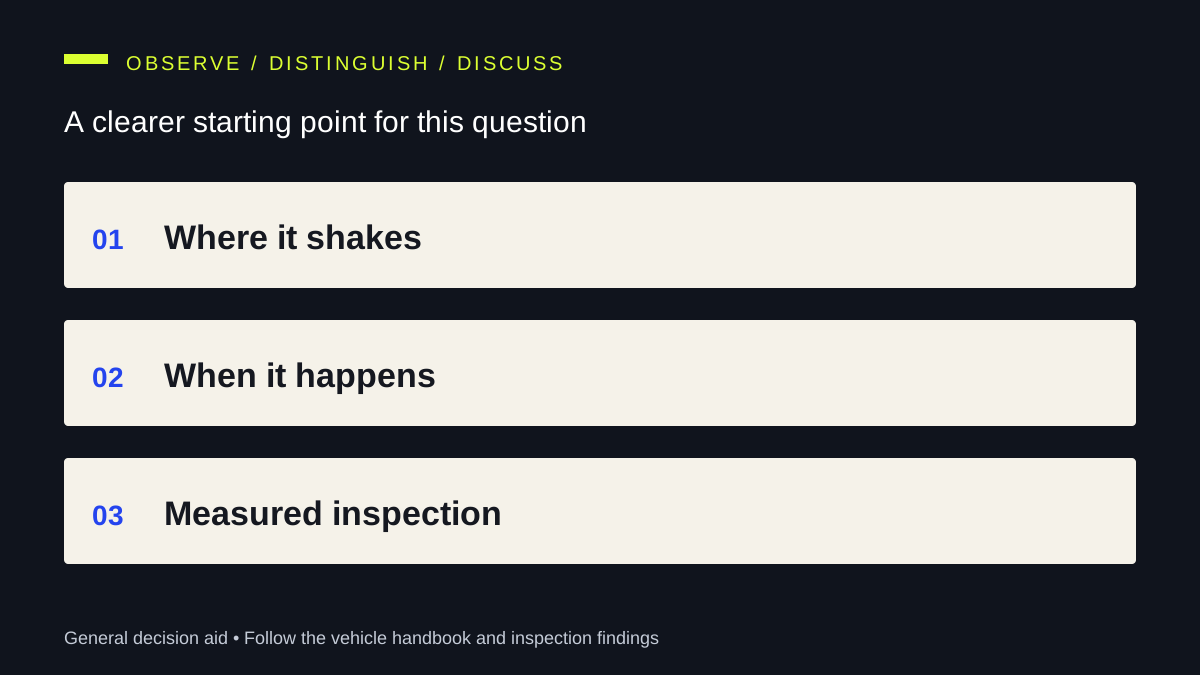
Editorial decision aid. This diagram does not diagnose a vehicle.
What should you report if the steering wheel shakes when braking?
Describe where you feel the vibration: steering wheel, brake pedal or vehicle body. State whether it happens when you apply the brakes, remains without braking or follows recent wheel work. These distinctions narrow the conditions to investigate; they do not identify a particular axle or part without measurement.
Do not recreate braking at high speed to provide a better description. Report the conditions already observed, including pulling, unusual noise or a warning. Brake calipers, pads and rotors belong to a wider brake system whose condition needs assessment when the complaint is new or recurring.
How should you describe the braking vibration?
- Record the symptom location and conditions already observed.
- List recent wheel, tyre or brake work.
- Arrange assistance if braking is abnormal.
- Ask for measurements and a repair verification plan.
Discuss your vehicle in Sharjah
Describe where the vibration is felt and whether it appears only under braking when booking a brake and running-gear assessment.
Useful next steps: brake repair service; contact AS Auto Repair Garage Sharjah; How Long Does a Tire Plug Last? What You Need to Know.
Frequently asked questions
Does shaking always mean new discs?
No. The inspection should establish the cause before choosing parts.
Can balancing fix brake vibration?
Only if a wheel-balance issue is relevant. It does not repair a brake fault.
Should I test it at a higher speed?
No. Do not create a hazardous braking test; give the workshop your existing observations.
Is all pedal pulsing a fault?
Some operating systems can produce pedal feedback, but unfamiliar or persistent symptoms need vehicle-specific assessment.
What should happen after repair?
The original complaint should be reassessed safely and the findings explained, not merely the parts listed.
Are warped brake rotors always the cause of shaking?
No. Disc thickness variation, lateral runout, mounting condition and other vehicle components can need assessment. “Warped rotor” is not a substitute for the applicable measurements. Tell the workshop whether the vibration occurs only while braking or also while travelling without brake application.
Is it safe to drive with shaking when braking?
Changed braking, pulling, unusual pedal behaviour or a warning needs prompt assessment. This guide cannot clear a vehicle for continued driving from the symptom alone. Stop safely and arrange assistance if braking feels unreliable; do not conduct high-speed braking tests to diagnose it yourself.
Final answer
- Describe vibration in the pedal, steering wheel or whole vehicle separately.
- A speed-related vibration can overlap with a braking complaint.
- Brake parts, mounting condition and running gear may need inspection.