Adding Oil to a Hot Engine: Is It Safe?
Adding oil to a hot engine is not a procedure to improvise. Follow the handbook for the engine’s required temperature, waiting period and level-check method. Switch the engine off and avoid hot components. A warning about oil pressure needs a different response from a routine low-level check.
- Do not assume a hot-engine top-up is permitted. The cited Ford manual warns against adding oil to a hot engine. Ford owner manual.
- Switch the engine off and use the handbook’s level-check and cooling instructions.
- Confirm the approved oil specification and the amount actually missing; full engine capacity is not a top-up amount.
- An oil-pressure warning needs a safe stopping response, not a routine top-up assumption.
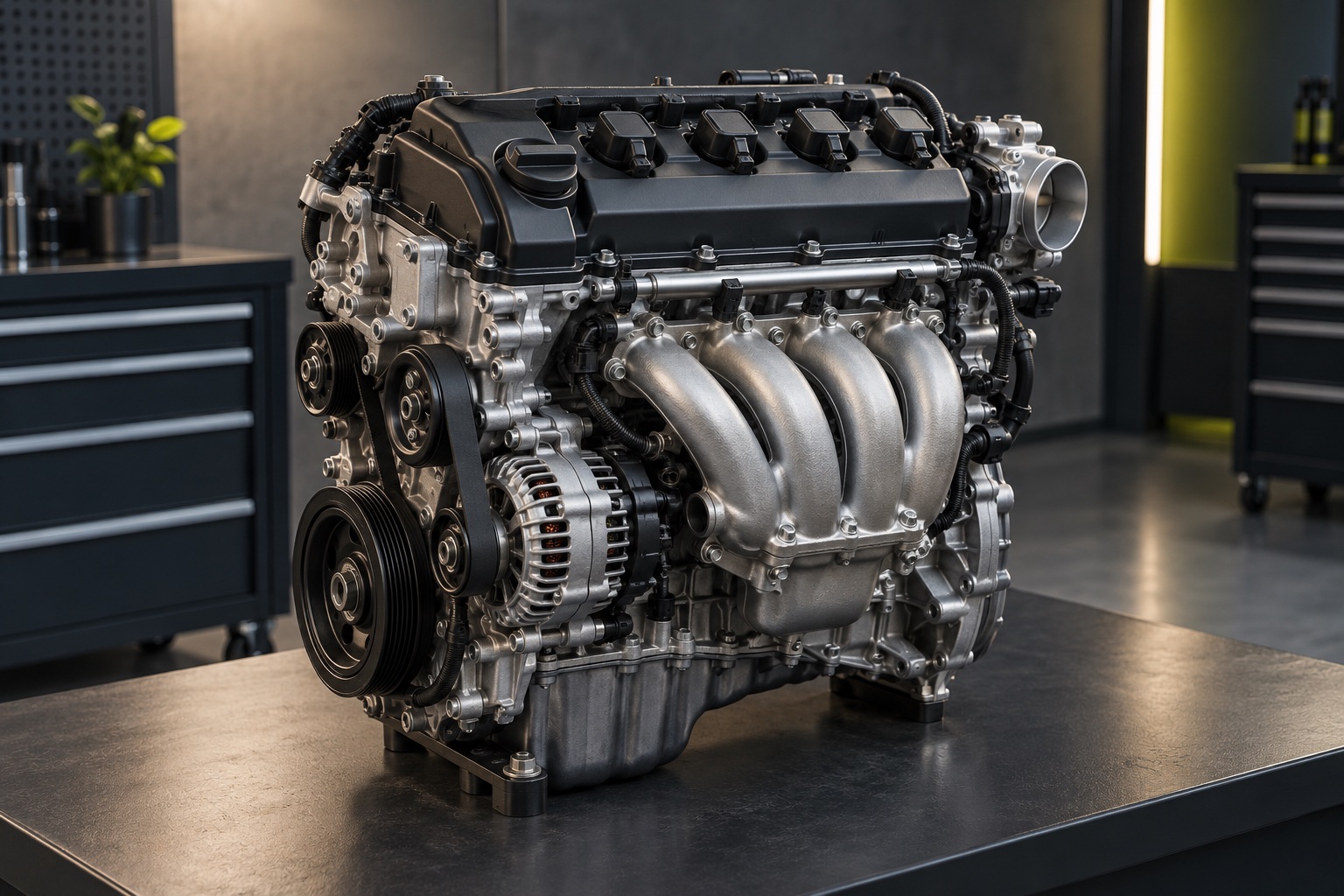
Why can the oil level reading change with test conditions?
Oil-level instructions specify the conditions that make the reading meaningful. Depending on the vehicle, these can include parking position, waiting after shutdown or an electronic measurement routine. Checking under different conditions can create an apparent difference without showing a true change in the amount of oil.
Use the method for your engine consistently. For a dipstick, identify the prescribed range and follow the instructions for reading it. For an electronic system, follow the conditions required to obtain a valid result instead of assuming that a missing or delayed display means the engine needs more oil.
If the reading is unclear, do not repeatedly add oil until the display changes. Ask the workshop to confirm the level using the appropriate procedure. An uncertain measurement is a reason to verify, not a reason to fill past the stated range. For a useful service record, note the date, mileage, oil specification and what was actually added. Record the distance driven and the quantity added each time. Consistent observations can help the garage investigate a recurring need for oil without confusing it with different measurement conditions at each check.
How do you choose the right oil before adding oil to a warm engine?
The oil must meet the engine's required viscosity and performance approval. Those are not interchangeable descriptions. A product with a familiar viscosity number can still need the relevant manufacturer specification, and a recommendation based on a different engine is not enough.
Ask the garage or retailer to identify the exact application rather than selecting a bottle by brand alone. Keep the service invoice or product specification available if you need to discuss what is already in the engine. Unknown fluid or a guessed grade adds uncertainty to a top-up decision.
A thicker oil is not a universal repair for leakage, fouling or a dashboard warning. If oil is being lost, the cause needs to be investigated; changing a fluid description does not establish that worn parts, an external leak or another problem has been corrected.
The Ford manual's top-up instructions also make the level limits part of the task. Correct oil in an excessive amount is still not the intended outcome. The aim is the specified level using the specified product and procedure, not simply a full-looking engine.
How does a top-up differ from an oil and filter service?
A top-up adjusts the existing oil level. It does not remove the used oil, replace a filter or complete every item in a scheduled service. Keep those scopes distinct when booking work or comparing an invoice.
- If an oil change was recently carried out, give the workshop the service record and explain what prompted the new check. A low reading after service needs verification under the correct conditions, followed by an explanation if the level is actually wrong. Do not assume either a service error or normal oil use from one uncertain reading.
- An estimate for recurrent oil loss should describe the intended investigation. Visible leakage, oily spark-plug deposits and exhaust symptoms may lead to different tests. The DENSO spark-plug diagnostic chart treats oil fouling as a defined finding with possible causes; it does not establish those causes from a low dipstick reading alone.
What should you do if an oil warning remains after a top-up?
Follow the instruction for that warning and avoid assuming that an added quantity has cleared the underlying problem. Oil pressure and oil level are different properties, so an active pressure concern cannot be dismissed solely because the level now appears within range.
Record the symbol or message safely while parked. Tell the garage whether it appeared during driving, at idle, after start-up or after recent work. Preserve any accompanying engine noise, temperature alert or loss-of-power observation, but do not restart repeatedly to create a diagnostic demonstration.
Ask the technician which measurement is being investigated and what specification applies. A pressure test, a level check and an electrical check of a warning input are not the same procedure. The repair explanation should connect its findings to the exact alert you reported. For a routine top-up, the successful result is a correct level obtained safely under the handbook's conditions. For a persistent warning or repeated loss, the successful result also requires an explanation of the cause. A generic instruction to “add oil while hot” cannot supply either outcome for every vehicle.
What should you do if the level is above the permitted mark after adding oil?
A reading above the permitted range needs the applicable vehicle procedure and assessment. Do not treat excess oil as a harmless reserve, and do not improvise draining hot oil beside the road. First confirm that the reading was obtained under the conditions required by the handbook.
If you know the product and amount added, keep that information for the garage. If you do not know the amount, say so. The technician can evaluate the actual level and determine the appropriate correction; an estimate based only on the bottle’s original capacity may not describe what entered the engine.
Keep the suspected overfill and the underlying reason for adding oil separate. Correcting the current quantity does not explain repeated oil loss, an external leak or an unresolved warning. Those concerns may require an additional inspection rather than another scheduled top-up.
How long should the engine cool before you add oil?
Use the waiting and temperature conditions in the handbook for that engine. There is no single cooling time that applies to every car. The Ford oil-check instructions for the covered vehicle distinguishes the conditions for checking oil from the precautions around a hot engine; its stated wait applies to that covered vehicle.
Cooling time and settling time answer different questions. Cooling reduces the temperature of components you might touch. Settling allows oil to return to the area from which the level is measured. An engine can be safe enough to approach while a reading still needs its prescribed measurement conditions.
Do not judge the procedure from whether the bonnet feels warm. Read the instructions for the dipstick or electronic level system and the required engine state. If you cannot confirm them, obtain help rather than guessing when to open the filler or how much to add.
Can you check the oil level with the engine running?
Use only the measurement method specified for your vehicle. A conventional dipstick procedure and an electronic oil-level procedure may have different requirements. Do not transfer the engine state from one system to another.
The Ford oil-check instructions for the covered vehicle is an example of a handbook setting conditions for an accurate reading. The practical point is consistency: a reading obtained under the wrong conditions can lead to an unnecessary top-up or an apparent change in oil consumption.
Identify the actual message too. A low oil-level indication concerns quantity. An oil-pressure warning concerns another condition and can require immediate stopping under the handbook. Adding engine oil is not a universal response to every oil warning.
If a top-up is appropriate, identify the specified oil before adding anything and keep track of the actual quantity. If the level is already high, the reading is uncertain or a pressure warning remains, stop the experiment and arrange assessment.
Oil top-up conditions and precautions
| Situation | What to establish | Do not assume |
|---|---|---|
| Routine level check | Required temperature and method | One waiting time fits all cars |
| Low-level message | Confirmed level and correct oil | Full service quantity is needed |
| Pressure warning | Handbook stopping instructions | A top-up alone makes driving safe |
| Repeated oil loss | Documented usage and leak findings | Thicker oil is the answer |
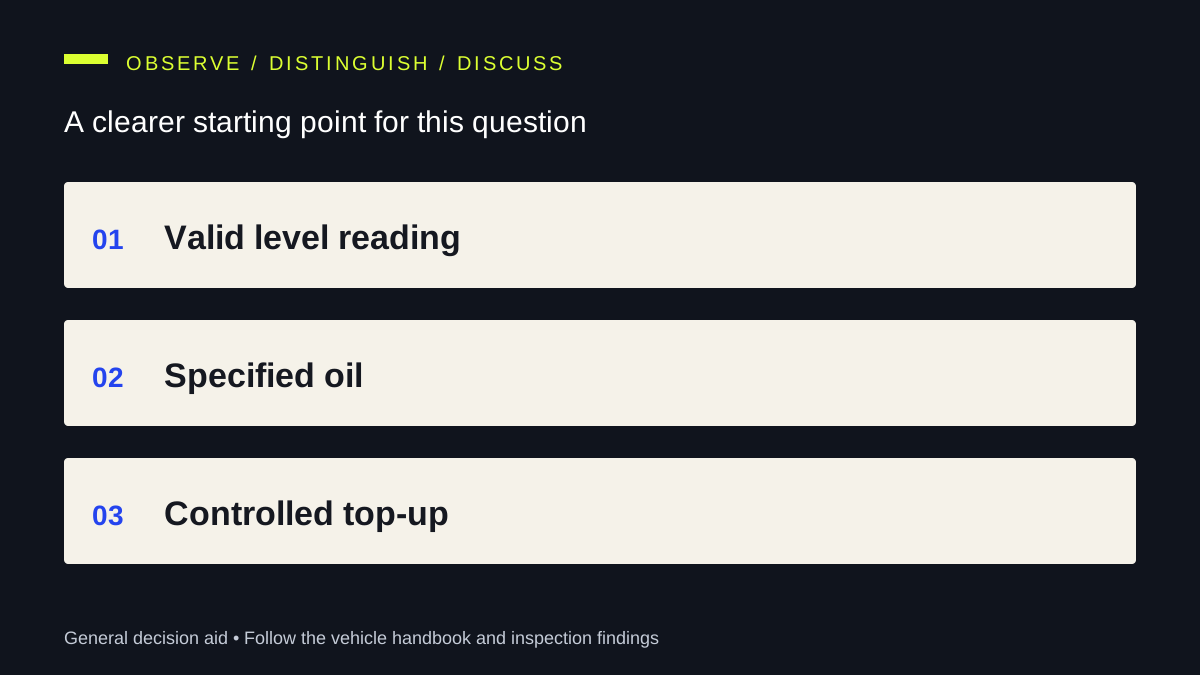
Editorial decision aid. This diagram does not diagnose a vehicle.
Which handbook details do you need before an oil top-up?
- Park as the handbook requires and switch off.
- Allow the required conditions for a valid reading.
- Confirm oil grade and the correct filler.
- Follow the specified top-up method and recheck.
Discuss your vehicle in Sharjah
If oil loss or a pressure warning recurs, request a lubrication-system assessment rather than relying on repeated top-ups.
Useful next steps: car oil change service; contact AS Auto Repair Garage Sharjah; Oil on Spark Plug: How to Diagnose and Prevent Engine Damage.
Frequently asked questions
How many minutes should I wait?
Use the handbook. A universal waiting time is not reliable across engines and measuring systems.
Can I check oil with the engine running?
Follow the vehicle procedure. Do not substitute an improvised method for the prescribed check.
Should I add a full bottle?
No. A bottle size is not a measurement of the amount missing.
Is the oil-pressure lamp the same as low oil level?
No. Identify the exact warning and follow its instructions.
Can a different viscosity stop oil use?
Do not choose a different viscosity as a general remedy. The cause and the approved specification need checking.
Can I add engine oil with the engine running?
Use the vehicle’s documented checking and top-up procedure. The Ford example cited in this guide requires the engine to be off and oil to settle before its check. Do not apply a running-engine method copied from a different system or reach into moving or hot components.
How long should I wait before checking oil after driving?
Use the waiting condition stated in your vehicle’s handbook. Different checking systems have different procedures, so this guide does not prescribe one cooling period for every car. Engine temperature, oil settlement, level ground and the specified reading method need to be considered together.
Final answer
- Do not assume every manufacturer permits a hot-engine top-up.
- Check the level using the vehicle’s stated method.
- Use the specified oil and avoid overfilling.