How Much Horsepower Does a Turbo Add?
How much horsepower does a turbo add? There is no fixed gain. The result depends on the engine, turbo selection, fuel system, cooling, calibration and how power is measured. A turbocharger’s advertised power range is not a promise of the increase your car will achieve.
- There is no fixed turbo horsepower gain. Garrett’s G25-660 rating of 350–660 hp describes potential flywheel output, not power added to every engine. Garrett product data.
- Measure the engine baseline and final output with the same method before calculating a gain.
- Wheel horsepower and flywheel horsepower are different measurements; a universal drivetrain-loss conversion is not appropriate.
- Fuel supply, cooling, calibration and the intended use must be assessed with the turbo selection.
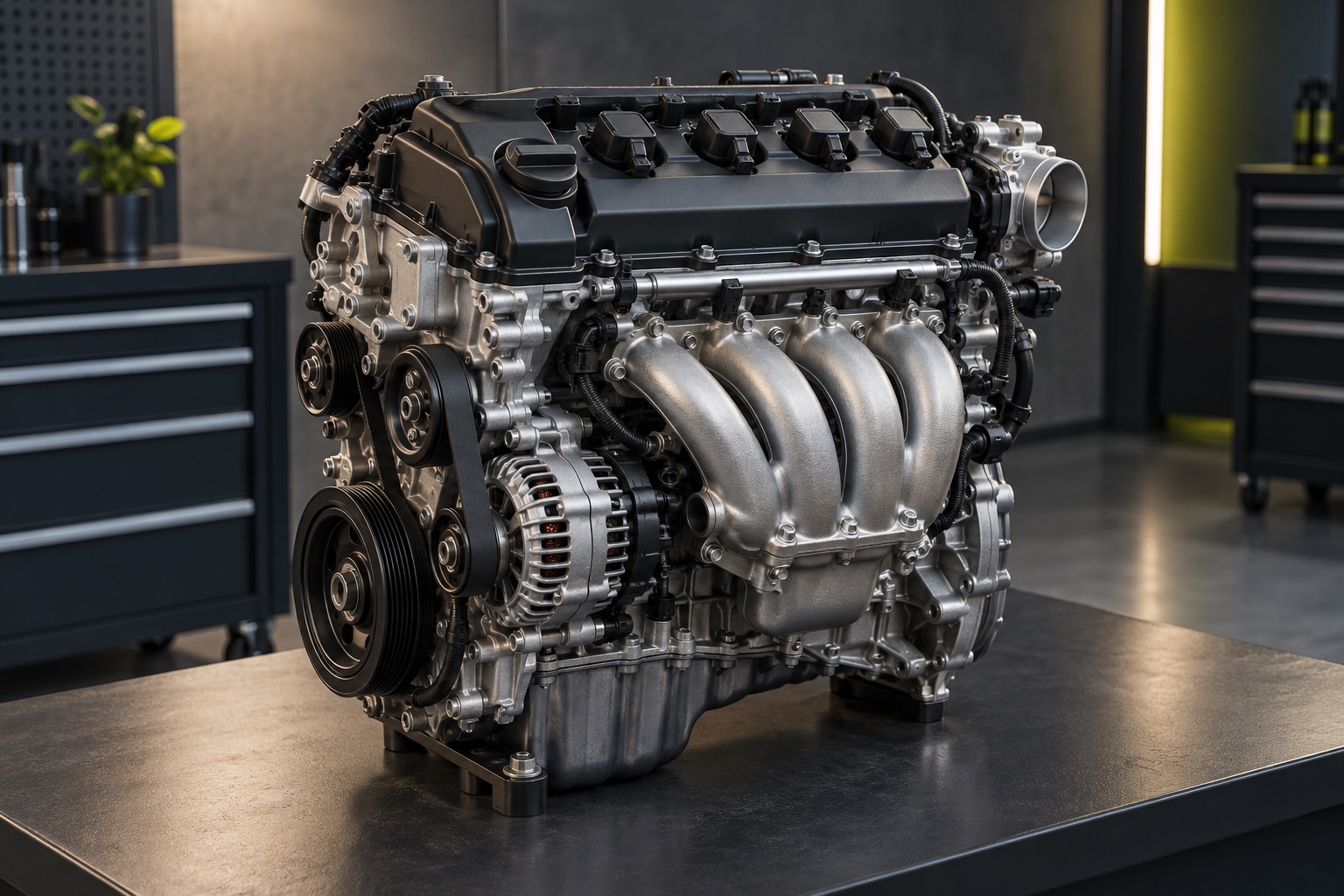
What does a turbocharger’s horsepower rating mean?
A turbo’s catalogue rating describes potential supported engine output, not the horsepower it adds. Garrett lists the G25-660 at 350–660 hp and identifies that capability as potential flywheel power calculated from compressor choke flow. Actual results depend on the complete engine setup and calibration.
What do pressure ratio, airflow and compressor maps tell you?
A compressor map describes operating capability rather than a guaranteed engine result. Garrett's turbo technical material discusses airflow, pressure ratio and operating regions. These terms are more useful for selection than comparing the visible diameter of two turbochargers.
Pressure ratio uses absolute pressure, not simply the number displayed on a boost gauge. That distinction matters because the gauge reading is relative to surrounding pressure. Treating gauge boost as the whole calculation overlooks the inlet condition and can misrepresent the compressor's operating point.
The map also contains boundaries such as surge and choke. A selection needs to suit the engine over its operating range, not merely place one peak point inside a claimed capacity. Ask the specialist how the proposed turbo matches the intended engine and use case. You do not need to design the system from a chart at home. You need an estimate that explains its selection rather than promising a percentage gain because another car used the same turbo. A compressor capable of supporting a target is only one part of a build capable of reaching it.
Why do fuel supply, charge temperature and calibration affect the result?
Additional air capability must be considered with the rest of the engine system. The fueling strategy, calibration and thermal conditions are part of the complete configuration, not optional footnotes to a turbo purchase. A supplier's capability figure should not be used as proof that the standard engine can tolerate the proposed setup.
Ask whether the scope includes the components and checks needed for the specific engine. A quotation that covers only a turbo and installation hardware is not equivalent to one that includes calibration and verification. The difference should be explained before you compare totals.
Charge-air temperature and intake pressure are also distinct from the desired power number. A peak output claim alone does not show the conditions under which it was obtained or whether the setup remains suitable during repeated use. Request the relevant test record rather than a verbal promise of “more boost.”
Do not copy a calibration, fuel requirement or boost target from another engine. Even similar-looking vehicles can differ in engine variant and supporting equipment. The assessment should use the actual vehicle and a defined objective, such as a particular driving use, rather than an arbitrary target from a product catalogue.
How should you compare wheel horsepower with flywheel horsepower?
Compare like measurements. Wheel output is measured through the drivetrain on an appropriate vehicle dynamometer, while a flywheel output claim represents engine output before that drivetrain path. The numbers should be labelled accordingly rather than converted using a single universal loss percentage.
- If a before-and-after report is available, ask whether both runs used the same test basis, units and relevant settings. Peak horsepower alone can also conceal how the output changes across engine speed. Review the curve and the conditions with the specialist, rather than accepting a higher peak as proof that every aspect of the result improved.
- A clearly labelled hypothetical calculation can explain subtraction: post-modification measured output minus the comparable baseline gives the measured change on that basis. It does not prove what the same parts will achieve in a different vehicle.
What questions should come before buying or approving a turbo upgrade?
Begin with engine health and the intended use. If the current vehicle has an unresolved misfire, oil-use complaint or cooling problem, an output upgrade is not a substitute for addressing it. Ask the specialist to explain the relevant pre-modification assessment and any limitations it found.
Then agree the complete scope: selected turbo, associated parts, calibration, testing and documentation. Identify which work is included, what additional findings could change the estimate and how the result will be measured. This prevents a component price being mistaken for the cost of a finished, verified system.
Check applicable modification, inspection, registration and insurance requirements with the responsible local organizations before committing. A performance parts catalogue does not establish permission for road use in Sharjah or elsewhere. Avoid importing an answer about another country's rules as a UAE approval. The defensible result is a vehicle-specific plan and a documented comparison, not a universal “extra horsepower” number. A suitable turbo supports the plan; it does not replace it. If the supplier cannot explain the measurement basis and supporting requirements, the advertised range is insufficient evidence for the result you expect.
Why does a turbocharger need both airflow and pressure to support horsepower?
A compressor map describes a turbocharger’s operating range, rather than a fixed horsepower increase. Garrett’s compressor-map guide distinguishes pressure ratio from mass airflow and shows why both are needed for selection.
Boost describes a pressure condition. Air mass describes the quantity of air delivered over time. Two setups can show a similar boost reading while moving different air mass because the engines and operating conditions differ. The fuel and calibration must also suit the air actually used.
For this reason, an advertised turbo power capability is not the same as additional power above your engine’s current output. Nor is a compressor map a completed vehicle test. It supports a design calculation that still needs the surrounding engine and fuel-system requirements.
What does a torque curve show about turbo lag and useful performance?
Peak horsepower describes one point in the measured output. A torque curve shows how output develops through the tested engine-speed range. A car used for daily driving spends much of its time away from the point of maximum power, so the shape of the result matters.
Garrett turbo selection treats response and intended use as selection questions. A larger turbo chosen only for maximum airflow may produce a different response from a setup selected for earlier usable torque.
Ask for the baseline and modified runs on a comparable measurement basis: the same vehicle, fuel, measurement location and stated test conditions. Wheel horsepower and flywheel horsepower should be labelled. A conversion guessed from an arbitrary drivetrain percentage is not a substitute for that record.
The supporting proposal should identify intercooling, fuel delivery, lubrication, cooling and calibration where relevant. These are engineering requirements, not optional additions that a power number proves unnecessary. Confirm the applicable road-use and insurance requirements separately with the responsible provider.
Turbo claims and the evidence needed
| Number or claim | What it describes | What it cannot establish |
|---|---|---|
| Turbo power range | Selection envelope | Guaranteed gain |
| Boost pressure | A pressure condition | Safe engine output |
| Wheel horsepower | Output measured through drivetrain | Crank output without assumptions |
| Before-and-after measurement | Change under stated test conditions | Reliability in every use case |
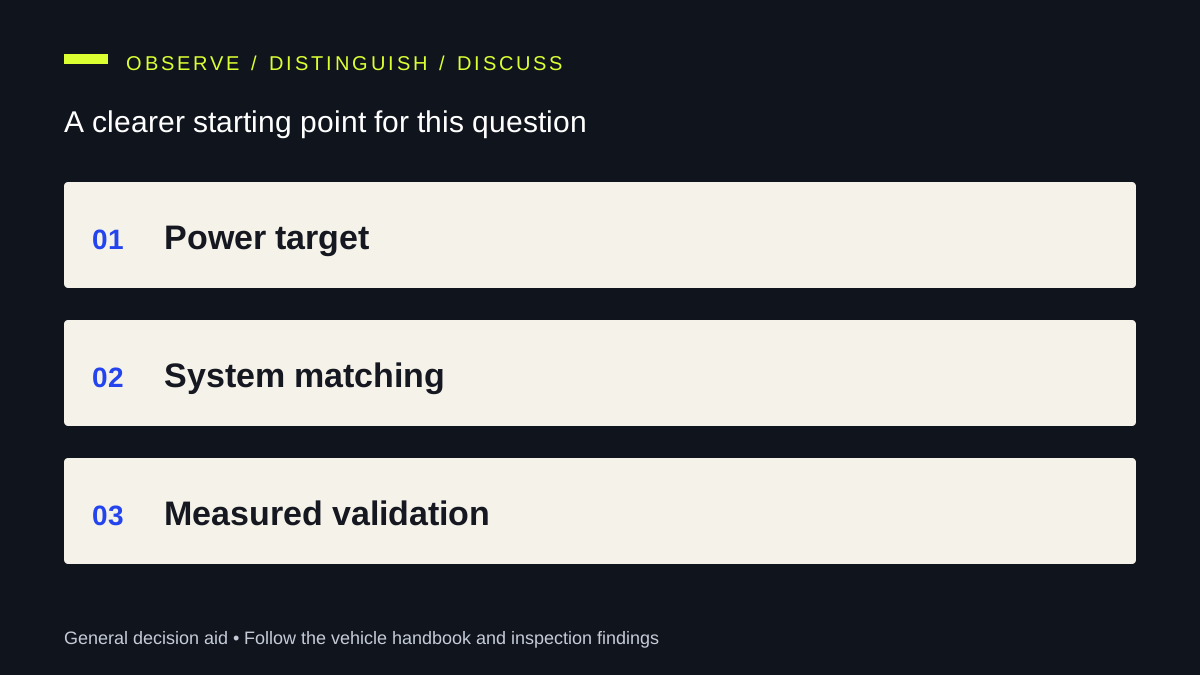
Editorial decision aid. This diagram does not diagnose a vehicle.
How do the turbine, wastegate, intercooler and tune affect turbo horsepower gains?
Garrett’s turbo-system explanation describes the exhaust-driven turbine, compressor, wastegate and charge-air cooling. The turbine extracts exhaust energy to drive the compressor. A wastegate controls the exhaust flow bypassing the turbine in its fitted design; an intercooler cools compressed intake air. They perform different jobs within the system.
A tuner therefore needs the complete engine and turbo setup before proposing an ECU tune. A boost value expressed in psi is a pressure measurement, not a horsepower result. Fuel, charge temperature, engine displacement, control limits and the measured response all belong in the assessment. Treat a peak-power claim without those conditions as incomplete.
Maintenance remains part of the decision. Confirm the required service procedure and the support available for the proposed installation. This is a planning question for the actual hardware and intended use, not a promise that larger turbos or more pressure will be suitable for every motor.
What vehicle details belong in a turbo-upgrade assessment?
- Define the intended use and power measurement.
- Document the current engine condition and baseline.
- Request a complete supporting-system proposal.
- Confirm calibration, validation and applicable approvals before buying parts.
Discuss your vehicle in Sharjah
Discuss the complete engine and fuel-system requirements before selecting a turbo. A product rating cannot specify the gain for your car.
Useful next steps: engine repair service; contact AS Auto Repair Garage Sharjah; Bad Idle Air Control Valve Symptoms: IAC Valve Issues.
Frequently asked questions
What does Garrett’s G25-660 horsepower range mean?
Garrett lists 350–660 hp as potential supported flywheel output calculated from compressor capability. It is not the amount of horsepower added to every existing engine. Garrett product data.
Does every turbo add the same percentage?
No. A universal percentage ignores the engine, installation and measurement method.
Is more boost always better?
No. Pressure alone does not show useful airflow, temperature control or the engine’s limits.
Can a stock engine handle it?
That requires an application-specific assessment. Do not rely on a generic safe-boost figure.
Will a turbo fix existing low power?
An existing fault should be diagnosed first. Adding hardware is not a substitute for repairing the baseline engine.
Does more boost always mean more horsepower?
No. Boost pressure alone leaves out air mass flow, charge temperature, engine behaviour and calibration. Compare defined operating conditions and the complete setup. A pressure number from another vehicle cannot establish the power or suitability of a turbo installation on yours.
Is wheel horsepower the same as engine horsepower?
No. They describe different measurement points and should remain labelled in a comparison. Use results measured on the same basis, with the test conditions recorded. Do not turn one into the other with an unexplained universal conversion percentage.
Final answer
- Garrett lists 350–660 hp as potential supported flywheel output calculated from compressor capability. It is not the amount of horsepower added to every existing engine. Garrett product data.
- Start with a measured baseline and a defined use case.
- Supporting systems and calibration belong in the project budget.