Driving on Empty: How Far Can You Really Go?
Driving on empty does not come with a guaranteed reserve distance. The warning threshold, usable fuel and current consumption vary. Treat a low-fuel warning as a reason to refuel, not an invitation to test the last possible kilometre.
- No fixed remaining distance is guaranteed after a low-fuel warning. Ford describes distance to empty as an approximate, changing estimate. Ford owner manual.
- Driving conditions and idling can change consumption; low-fuel reserve is not the same volume in every car.
- Refuel promptly rather than treating the range display as a permission to complete a longer journey.
- If the engine stops, separate fuel supply from battery and starting-system findings before selecting a repair.
What does the distance-to-empty display actually calculate?
It estimates remaining range using the vehicle's available information. It is not a direct measurement of how many more road kilometres the car is guaranteed to complete. The Ford distance-to-empty instructions describe the figure as approximate and explain that driving-pattern changes can make it change.
- This distinction matters when conditions differ from the recent driving that informed the estimate. A stationary wait consumes fuel without adding distance, and a congested route is not the same as a steady journey. The display should help you plan a refuelling stop before the situation becomes urgent.
- If the figure changes quickly, record the conditions rather than assuming the gauge failed. At the same time, a display that behaves inconsistently with repeated refuelling records may need assessment. An estimate changing with use and a faulty indication are different possibilities.
Do not use a countdown to zero as a vehicle test. The amount of usable reserve fuel and the remaining range depend on the vehicle and operating conditions. Another owner's achieved distance cannot become a promised safety margin for your journey.
Why can a fuel warning and a range estimate appear to disagree?
They are different indications with their own vehicle-specific logic. A warning can tell you to refuel even while the estimated range still shows a value. Treat the warning according to the handbook instead of assuming the numerical display overrules it.
The fuel gauge also does not turn its marks into a precise usable-volume measurement. To understand a particular indication, use the owner's manual rather than assigning a universal amount to “one bar” or “below empty.” Tank shape, sensing and the car's calibration are part of the actual system.
If you are investigating an indication problem, preserve the refuelling receipt, amount purchased and observed gauge behaviour. A single fill amount does not automatically reveal the tank's exact remaining fuel because the filling conditions and shutoff behaviour can differ. The useful question is whether the indication supports normal refuelling decisions or requires inspection. It is not how to discover the absolute final limit by running the vehicle dry. A diagnostic appointment should assess the sensing complaint without relying on the driver to create a breakdown.
What should you do if the engine stops or begins to run poorly?
Prioritize vehicle control and reaching a safe stopping location where possible. Arrange roadside assistance rather than repeatedly attempting to drive the final distance. Do not stand in a traffic lane to investigate the tank or attempt improvised fuel handling.
- Describe the event accurately to the assistance provider: a low-fuel warning, loss of power, a stall or a no-start. Those observations may be connected, but the exact fuel level and vehicle condition still need to be established. A breakdown near an empty indication does not prove that no other problem is present.
- Follow the manufacturer's instructions for supplying fuel and restarting if that becomes the appropriate professional response. Different vehicles and fuel systems can require different procedures.
If normal operation does not return after the proper response, request diagnosis instead of assuming more fuel will eventually resolve it. Keep the warning and sequence available for the garage. A starting-system issue, fuel-system issue and inaccurate gauge need different evidence.
How can you investigate unexpectedly early low-fuel warnings?
Begin with consistent records of use and refuelling rather than a deliberate run-to-empty test. Record distance travelled, fuel purchased and the warning observed. Check whether the vehicle and fuel grade match the records, and note major changes in journey conditions.
A higher spending total is not enough to establish higher fuel consumption, because price and purchase quantity can change independently. Likewise, a shorter displayed range after an urban journey may reflect the estimate's conditions rather than a smaller tank or a failed pump.
Ask the garage what inspection is appropriate if the indication remains implausible. The estimate should distinguish checking the fuel-level indication from diagnosing poor engine running or a recurring no-start. A generic pump replacement does not explain every disagreement between a receipt and a dashboard estimate. The dependable outcome is a working indication and a refuelling plan with room for changed conditions. The article cannot provide a universal distance after “empty,” because the display and warning are not permission to exhaust the supply. Refuel promptly and investigate any recurring inconsistency using records and vehicle-specific checks.
Why can the displayed range rise without any fuel being added?
A remaining-range figure is an estimate, not a measured route allowance. Ford’s distance-to-empty explanation states that the estimate can increase, decrease or remain unchanged as driving conditions change. An increase therefore does not mean the tank has gained fuel.
Keep the gauge and the calculation separate when reporting a concern. A gauge describes the system’s fuel-level indication; the range display interprets available information to estimate distance. A change in one may need a different explanation from a change in the other.
If the displayed range seems implausible, note the indication before and after a normal refuelling stop and the actual amount purchased. Do not try to calibrate it by deliberately running the vehicle out of fuel. That experiment would not establish an appropriate safety reserve for future trips.
The workshop can identify the fitted measuring and display arrangement and evaluate a genuine inconsistency. Provide any warning wording or recent instrument, battery or fuel-system work. A low estimate after different journeys is not automatically proof of a failed fuel sender.
Does zero miles to empty mean the fuel tank is completely dry?
A distance-to-empty display is an estimate. The Ford range-display explanation describes how driving conditions can change its result. A zero estimate does not give the driver a verified reserve distance.
The fuel gauge, low-fuel warning and range calculation describe related information in different ways. None creates a universal allowance to reach a distant gas station. The amount available and the vehicle’s consumption still depend on the actual car and conditions.
Treat a low-fuel warning as a reason to choose a suitable refuelling opportunity. Do not plan around a claim that every car can travel a particular number of miles after the display reaches zero.
Why can driving on empty in traffic differ from the same distance on a moving route?
Fuel can be consumed while the vehicle makes little progress. US DOE/EPA fuel-economy guidance identifies idling as fuel use without useful travel distance. A remaining-range plan that ignores waiting conditions can therefore be misleading.
Route access matters as well: a known nearby station and an unfamiliar route with uncertain opening or entry conditions are different choices. Use the real refuelling opportunity rather than trying to turn a dashboard estimate into a guaranteed journey.
If the vehicle runs out of fuel or stops, prioritise a safe stopping position and appropriate assistance. The correct restart or priming procedure, if one is needed, belongs to that vehicle. Do not improvise fuel transfer or repeated starting attempts beside traffic.
When the gauge or estimate appears inconsistent after ordinary refuelling, describe the display and the actual volume purchased. That is useful evidence for checking the indication. Deliberately running the tank dry is not a safe calibration method or a way to establish a dependable reserve.
Low-fuel situations and their risks
| Reading | What it means | Better decision |
|---|---|---|
| Low-fuel lamp | Refuelling is needed | Use the next suitable opportunity |
| Distance to empty | Calculated estimate | Allow for route uncertainty |
| Gauge at empty | No reliable travel promise | Arrange safe refuelling or assistance |
| Unexpected gauge behaviour | Possible reading or use issue | Record and investigate |
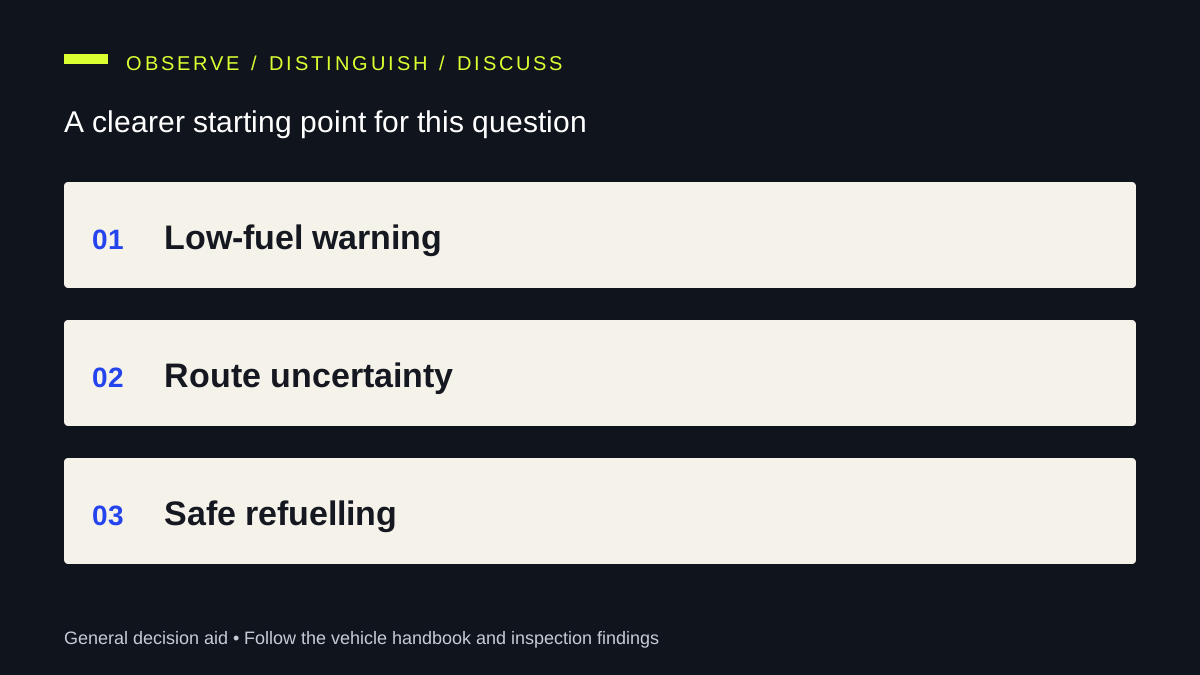
Editorial decision aid. This diagram does not diagnose a vehicle.
How far can you drive when the low fuel light comes on?
The remaining amount in the gas tank and the vehicle’s current fuel economy are not fixed by the warning light alone. Mileage shown as remaining range is an estimate. A gallon-based story from another car cannot establish how many miles your car has left, especially with different journeys, idling or fuel consumption.
Choose a fuel stop before the estimate becomes the basis for reaching the nearest gas station. If you run out of gas or the engine stops unexpectedly, move to safety if possible and arrange assistance. Any later fuel-pump or other component repair should follow a confirmed fault, rather than an automatic damage claim based only on the low-fuel event.
What helps assess an unexpected low-fuel event?
- Locate a suitable filling station before fuel becomes critical.
- Check route access and opening information when necessary.
- Avoid extending the journey to test the reserve.
- If stranded, move out of danger and arrange assistance.
Related question: Gas Expenses in the U.S.: How Much Does the Average American Spend?
Frequently asked questions
How many kilometres after the warning?
There is no reliable universal figure. Use the vehicle information and refuel promptly.
Can the display show range after the gauge says empty?
Display behaviour varies. Neither reading guarantees a safe remaining journey.
Should I carry loose fuel in the car?
Do not improvise fuel transport. Use the relevant safety guidance and approved arrangements if fuel must be transported.
Will switching off the AC guarantee I reach a station?
No. It cannot turn an uncertain reserve into a guaranteed distance.
Can repeated cranking fix a fuel-starved engine?
No. Follow the vehicle-specific restart procedure or seek assistance after correct refuelling.
Can I drive after the range display reaches zero?
There is no dependable distance allowance for every vehicle. The display is an estimate, and actual conditions can differ from those used to calculate it. Refuel before relying on the lowest estimate; if fuel supply becomes uncertain, choose a safe assistance plan rather than testing the reserve.
Does idling save the remaining fuel?
An idling combustion engine still uses fuel. Waiting with the engine running therefore changes the remaining-fuel situation without covering distance. The decision also includes the safety of the stopping place and exhaust exposure; a fuel estimate alone does not resolve either.
Final answer
- Distance to empty is an estimate, not a guarantee.
- A low-fuel warning does not represent the same remaining volume in every car.
- Traffic, route changes and driving conditions can change the estimate.