Car Blows White Smoke: Vapour or a Warning Sign?
If your car blows white smoke, first identify where it comes from and when it appears. Brief vapour at the exhaust is a different observation from persistent smoke, smoke under the bonnet or a plume accompanied by overheating. Colour alone cannot diagnose a head-gasket failure.
- White exhaust smoke alone does not establish a failed head gasket. Record duration, temperature warnings and fluid loss.
- Ford documents an oil-related white/blue startup-smoke condition in certain 2015–2017 F-150 vehicles with the 2.7L EcoBoost engine. Ford service bulletin.
- That Ford example concerns a specified oil-supply-tube repair, not a diagnosis for every vehicle.
- Persistent smoke with overheating or fluid loss needs prompt assessment rather than continued test driving.
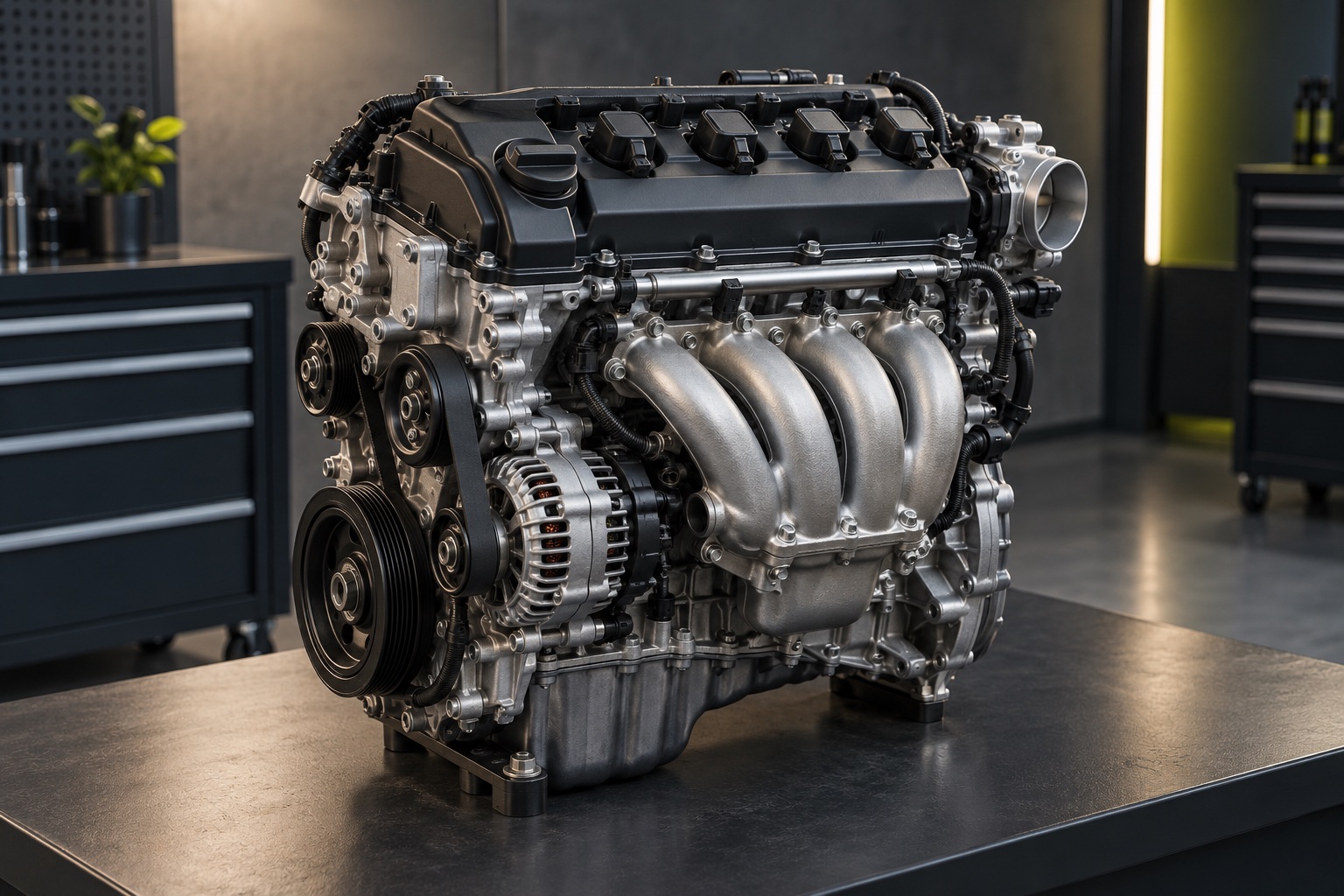
Why does the location of the white plume matter?
A plume at the tailpipe and vapour from under the hood present different inspection questions. Start by stating where it appears. A photograph taken from a safe distance can help, but a colour description alone cannot determine whether the source is water vapour, oil, coolant or something else.
- For a tailpipe complaint, note whether it appears at start-up, after warming or during normal driving. For an under-hood complaint, report any temperature alert, visible fluid or accompanying loss of power. If the vehicle is overheating or there is a fire concern, stop safely and arrange assistance instead of continuing the observation.
- Do not put your face near the exhaust to identify a smell or remove a hot coolant cap to look for a cause. The CDC exhaust guidance explains that exhaust exposure can involve carbon monoxide, which cannot be identified by colour or smell. A white plume is not an air-safety indicator.
Keep any observed fluid loss separate from assumptions about the plume. A declining coolant level, an oily plug and visible vapour are different findings. The technician needs to establish whether they are connected, rather than infer one cause from their appearance together.
Does white smoke always mean a failed head gasket?
No. A colour-based diagnosis cannot establish the failed component. One concrete manufacturer example shows why: Ford's technical bulletin hosted by NHTSA addresses excessive white or blue start-up smoke in certain F-150 vehicles equipped with a 2.7L EcoBoost engine and specifies an oil-supply-tube repair for the covered condition.
That bulletin is not a repair instruction for every smoking car. Its model, engine and condition define its applicability. The point is that a white-looking plume does not universally prove a coolant leak or a head-gasket failure. A vehicle-specific bulletin can provide a diagnostic lead only when the car and symptom match.
Tell the garage the exact model and engine, and ask whether applicable technical information was considered. If a major repair is proposed, request the test results and explanation that support it. A resemblance to an online photograph is not enough to choose between an oil-related route, coolant-related route and another exhaust condition. Do not buy an additive advertised as a universal response to white smoke before the cause is known. It does not establish what failed and may complicate the inspection. The appropriate next step is a defined diagnosis of the actual engine and operating pattern.
How can spark-plug or cylinder findings help distinguish possible causes?
They provide additional observations that can be compared with the running symptoms. DENSO's spark-plug chart describes several distinct appearances, including oil fouling, fuel wetting and carbon fouling. An oily firing end is different evidence from a generally white-looking exhaust plume.
- Ask whether the pattern affects one cylinder or several and how the finding was recorded. Compression or cylinder-leakage tests may be appropriate to a defined mechanical question, but their values must be interpreted against the specific procedure and engine requirements. Compare the results with the engine specification; the smoke alone does not confirm head-gasket failure.
- Likewise, oil on the outside of a removed plug should be distinguished from deposits at the firing end. Fluid transferred during removal can confuse interpretation. A photograph without the original location or cylinder identity has a narrower evidential value than a documented inspection.
The estimate should explain the path from findings to repair. “Smoke plus dirty plugs” is a description, not a complete diagnosis. Ask what alternatives were considered, what was ruled out and what additional test is needed if the cause remains uncertain.
What information should you collect without carrying out a risky home test?
Collect the vehicle details, timing and location of the plume, warnings and recent maintenance. A brief video taken from a safe location can show whether the condition occurs at start-up or continues, but you should not prolong running solely to create footage.
Keep actual fluid observations and receipts. If you do not know whether coolant or oil has changed, say that rather than inventing a consumption history. Uncertain information is more useful when labelled than when converted into a confident diagnosis.
Ask the garage for an inspection plan before approving a major repair. The plan should explain whether it begins with exhaust location, coolant-system checks, oil-related findings or another vehicle-specific route. Agree how additional work will be authorized as evidence emerges. After the repair, request the original complaint to be reviewed under appropriate controlled conditions and ask about remaining findings. The successful result is an explanation supported by tests and relevant verification. The article can help you prepare that discussion; it cannot identify a failed part from smoke colour or provide a safe distance to continue driving with an unresolved warning.
How can a technical bulletin help without becoming a diagnosis for every car?
A bulletin has a defined vehicle and condition scope. Ford’s start-up-smoke bulletin hosted by NHTSA identifies a particular covered engine application and repair. Its value is showing that an observed smoke colour can have a manufacturer-documented explanation other than a universal head-gasket diagnosis.
Before applying a bulletin, the technician needs to match the actual vehicle, engine and reported condition with its applicability. A similar-looking plume on an unrelated engine is not enough. Nor should an instruction for a specific oil-supply component be transferred to another turbocharged car merely because it also has a turbo.
Ask the workshop whether it found an applicable manufacturer instruction and which observations match it. Keep that answer separate from an ordinary symptom checklist. If the vehicle does not fall within the document’s scope, the inspection should follow the relevant information for that engine rather than treating the bulletin as an estimate template.
Does white exhaust smoke always mean a blown head gasket?
No. An exhaust plume must be interpreted by its location, duration, engine condition and any measured fluid loss. Appearance alone cannot identify a head gasket, a turbo-related oil path or another component.
HELLA cooling-system diagnostics shows the need to assess coolant level, leaks, temperature information and circulation separately. A falling coolant level with overheating is a different investigation from a brief plume after a cold start with no confirmed level loss.
Describe whether the plume clears, continues after warm-up or appears after another operating condition. Keep engine oil and coolant observations separate. If fluid was added, identify the product and quantity actually used. These details help the inspection follow the complaint instead of treating every white-looking plume as the same failure.
How can condensation, an oil-related start-up plume and coolant loss be distinguished?
These are different diagnostic categories. A transient vapour pattern concerns the exhaust conditions. An oil-related start-up complaint concerns an oil path and engine application. A coolant-loss complaint requires evidence about where coolant is leaving its system.
The vehicle-specific Ford bulletin cited earlier is useful precisely because it defines an affected engine and operating pattern. It should not be generalized to every turbocharged car. The same discipline applies to a suspected head-gasket problem: the technician must connect the test findings with the vehicle and complaint.
A repeatable level record can help distinguish an observed fluid loss from an impression that a reservoir looked different. It still does not identify the path of loss. Physical inspection and applicable tests are needed for that next conclusion.
Arrange assistance if overheating, unsafe running or a warning accompanies the plume. Never remove a hot pressurized coolant cap to investigate it. The repair should follow the confirmed findings, with any unresolved part of the complaint stated clearly.
White-smoke observations and possible causes
| Observation | Context to record | What it does not prove |
|---|---|---|
| Brief exhaust vapour | Cold start and weather | Head-gasket failure |
| Persistent plume | Warm engine and load | One specific failed component |
| Plume plus coolant loss | Level records and warnings | Exact leak location |
| Smoke under bonnet | Source area and temperature | Normal exhaust moisture |
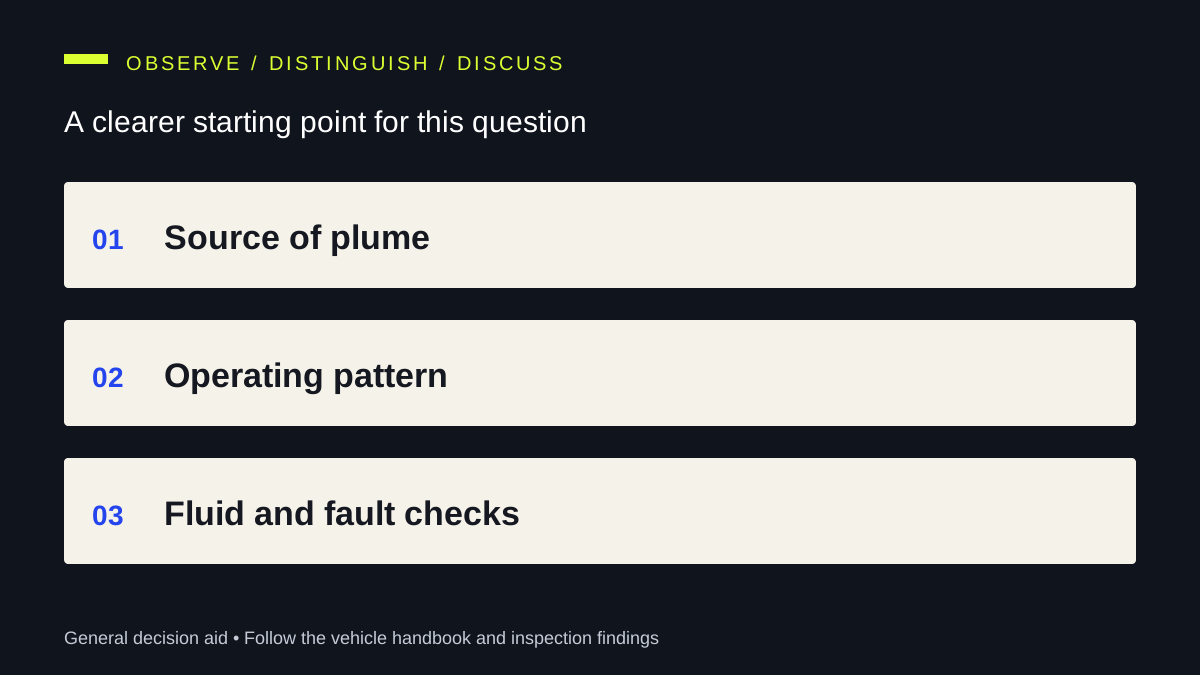
Editorial decision aid. This diagram does not diagnose a vehicle.
What should you note about white smoke coming from the exhaust pipe?
First distinguish a plume coming from the exhaust from smoke or vapour in the engine bay. The location changes what needs inspection. Note whether it appears during start-up, remains after warm-up or accompanies a warning, unusual running or fluid loss. Keep the car stopped safely if overheating or other urgent symptoms appear.
Descriptions such as white, blue smoke or black smoke are observations, not laboratory identification of the material. Likewise, “burning oil” and “head gasket” are proposed causes that need evidence. A coolant or oil record, ignition findings and the applicable model information are more useful than deciding the repair from the colour of a phone photograph.
Which exhaust and fluid observations help the technician?
- Identify the apparent source from a safe position.
- Record cold or warm operation and warning messages.
- Avoid further operation if overheating or heavy smoke occurs.
- Request diagnosis before approving major parts.
Discuss your vehicle in Sharjah
Give the workshop the plume location, duration and coolant-use record. Arrange assistance when temperature warnings or unsafe operation are involved.
Useful next steps: engine repair service; contact AS Auto Repair Garage Sharjah; Car Thermostat Problems: Common Symptoms of Failure.
Frequently asked questions
Does white smoke always mean a head gasket?
No. The source, persistence, fuel type and diagnostic findings matter.
Can I drive if it disappears?
Disappearance alone is not proof of safety. Consider warnings, fluid loss and how the engine runs.
Should I open the coolant cap?
Do not open a hot cooling system. Follow the handbook and allow safe conditions for inspection.
Is diesel white smoke diagnosed the same way?
Not necessarily. Fuel and combustion-system differences change the inspection route.
Will an additive confirm the cause?
No. Adding a product does not establish what failed and can complicate assessment.
Does white exhaust smoke always mean a blown head gasket?
No. The circumstances, persistence and fluid records matter, and a model-specific bulletin cannot diagnose every car. Coolant-related findings may justify cooling and cylinder checks, but the visible plume alone does not identify the failed part. Stop safely if warnings or overheating accompany it.
Does low engine oil identify the cause of white smoke?
A low oil reading is a separate finding that needs the correct checking procedure and assessment. It does not identify the composition of exhaust or prove why a plume appeared. Report oil and coolant observations separately rather than treating any fluid loss as the same fault.
Final answer
- Record the source, duration and accompanying warnings.
- Persistent smoke with overheating or fluid loss needs prompt assessment.
- Petrol and diesel engines can need different diagnostic routes.